

By Davinder Bir-Bhatti
How one failed invention, a devastating flood, and a bold idea led Ishaan Kohli to reimagine the way we grow food.
When Ishaan Kohli began his career, farming was nowhere on his radar.
His original goal was science. Following in his father’s footsteps, Kohli entered the world of research, studying physics at the University of Toronto and later working on biomedical technology. One of his early projects was a medical device that converted medicine and oxygen into a fine mist to improve treatment delivery.
The invention had promise, but the funding stopped.
What seemed like a setback would later become the foundation for something completely unexpected.

Growing up in Abbotsford, Kohli was always surrounded by agriculture. His friends and extended family worked in blueberry farming, and farms were a familiar part of his childhood. When devastating floods hit the Fraser Valley in 2021, he witnessed the impact on farmers firsthand. Crops were destroyed, but one thing stood out to him: many barns and agricultural buildings had survived.
That moment sparked a question that changed his career trajectory.
If the buildings were still standing, could they be used to grow food?
“I started looking into growing food inside barns, but a lot of the companies I researched had gone bankrupt because the costs were so high,” Kohli explains. “I didn’t have millions of dollars, but I had a barn, and we built a prototype.”
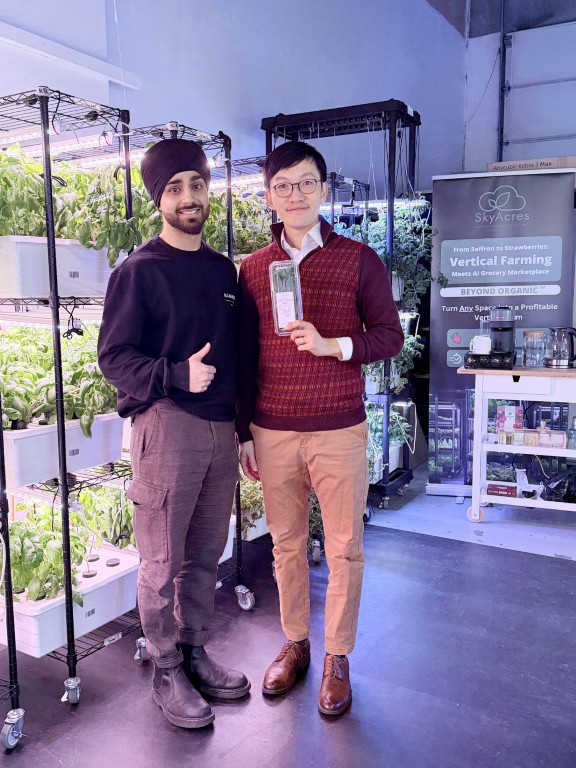
The same misting technology he originally developed for medicine was adapted into an irrigation system for indoor farming. That experiment became SkyAcres, a company that helps farmers transform unused agricultural land into productive indoor farms.
Kohli sees indoor farming as a tool to help farmers adapt to a changing world.
Farmers face increasing challenges from climate change, and many farming buildings sit unused or underutilized. SkyAcres helps farmers use those spaces to grow food closer to local communities.
“Vertical farming should be a tool, not a replacement,” Kohli says. “We’re helping farmers put their existing spaces to good use, keep farms afloat, and grow food locally.”
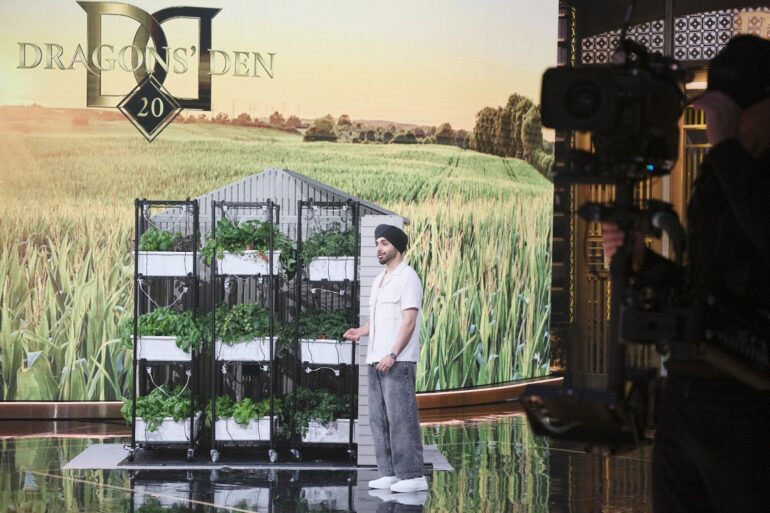
Kohli appeared on Dragon’s Den in January 2026 and failed to secure an investment deal. But it created opportunities far beyond what he expected. More than a thousand farmers, customers, and potential partners reached out after the episode aired, and he secured a venture capital investment deal.
Not getting a deal with the Dragon’s Den worked in his favor.
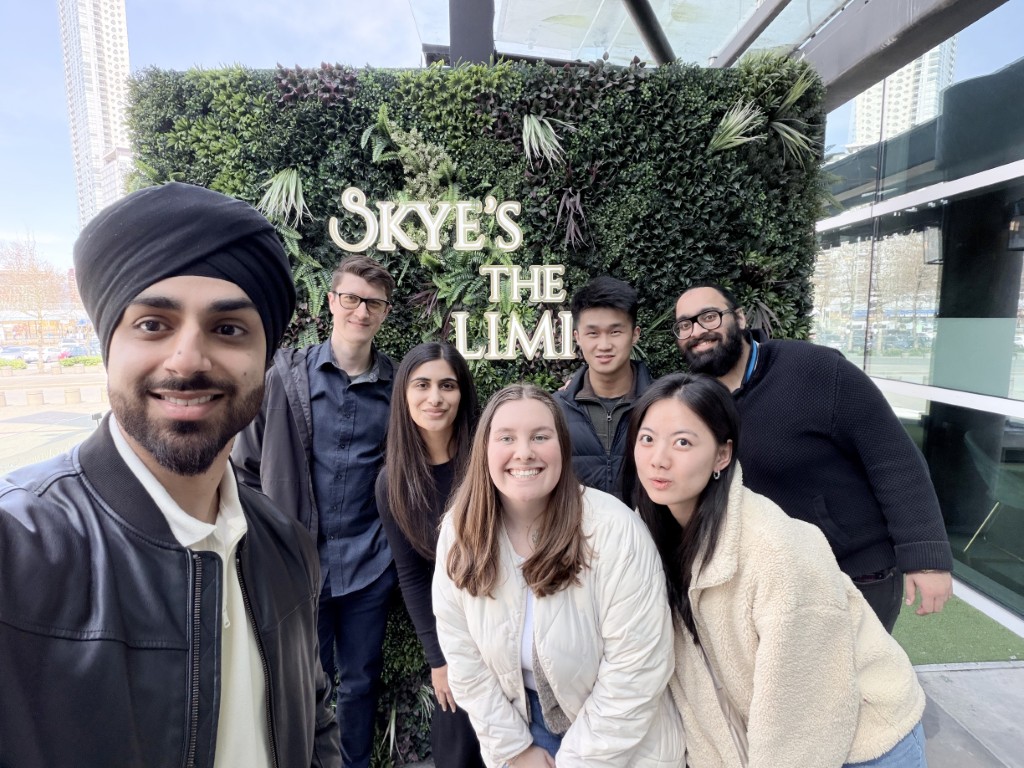
Today, SkyAcres has received more than $2 million in government research funding, allowing Kohli to dedicate himself fully to the company. The business now serves customers across Canada, the United States, and Hong Kong, with its largest facility in Kelowna growing basil for Pattison Food Group.
Some people think indoor farming is an expensive proposition, but Kohli says SkyAcres’ technology is much less expensive, and food grown indoors is not less nutritious.
In one experiment, SkyAcres compared tomatoes grown through their system against organic cherry tomatoes purchased from a grocery store. SkyAcres’ tomatoes showed significantly higher vitamin C levels.
Many tomatoes sold in Canada travel long distances and are picked before they are fully ripe, while locally grown produce is harvested closer to its peak.
Beyond technology, Kohli’s mission is also about changing how people view farming.
Many younger generations are moving away from agriculture. Kohli hopes technology can make farming exciting again by combining it with innovation, data science, and entrepreneurship.
“I want to make farming cool again,” he says. “When I ask kids where their food comes from, many say the grocery store. They don’t realize everything that happens before food reaches the shelves.”
Kohli credits much of his entrepreneurial mindset to his family. His mother built a health supplement business with formulations designed by his father that grew from products prototyped in their kitchen to nationwide distribution.
Entrepreneurship could be a legitimate career path. That message is important within communities where young people are often encouraged to pursue traditional professions.
“Entrepreneurship is a viable career path,” Kohli says. “When you’re young is the best time to take risks. Parents should allow their kids to think of entrepreneurship as an option.”
For Kohli, success has never been about reaching a final destination. It is about learning, adapting, and having the courage to pursue problems worth solving.
A failed medical invention, a devastating flood, and a simple question about empty barns became the foundation of a company determined to grow more than food; it is growing a new vision for the future.