


By Surbhi Gogia
Dr. Shahana Alibhai is family physician, a keynote speaker, a National Accreditor for the College of Canadian Family Physicians, and has served as a mentor in the UBC Faculty of Medicine Residency Training Program. She has been guiding patients through illness, worry, and uncertainty for many years. In the consulting room, she offers steady hands to care for her patients.
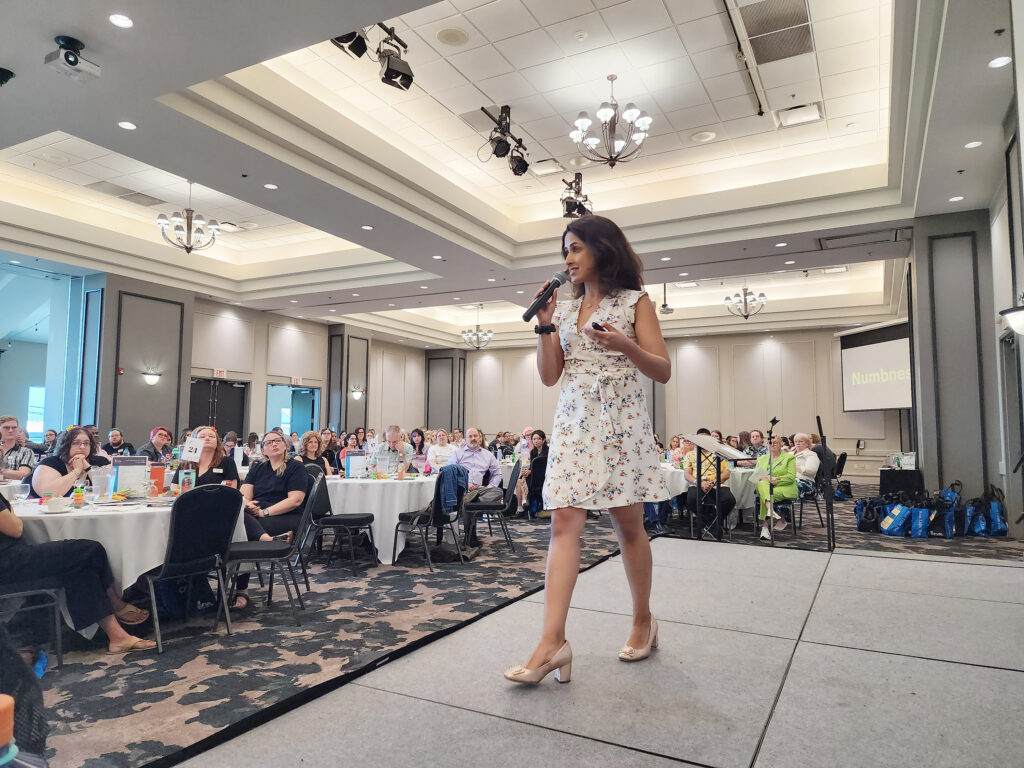
In her talks, she offers comforting words to help heal the audience. Best known for her TEDx talk “Emotional Literacy for Better Mental Health,” Dr. Shahana, with a unique ability to blend science, storytelling, and real-world strategies, motivates many people each day to overcome shame and guilt and have the courage to speak openly about mental health challenges.
But this journey of healing others did not come solely from the traditional path of academic education. It was years of struggling with her own mental health that led her to reflect, confront her fears, resolve her trauma, and discover the path to treatment for herself and, eventually, for others.
According to her, mental health doesn’t separate doctors from patients; it quietly walks alongside everyone, no matter their profession or status. If a doctor, often viewed as a symbol of strength and stability, can face mental health challenges and speak openly about them, others should feel encouraged to do the same.
Born into a family of East African immigrants who came to Canada, Dr. Shahana was raised in Abbotsford. She says, there are two things you cannot control in your life—your birthplace and the parents who raised you. I was fortunate in both. I was raised in British Columbia by two incredible parents who themselves were refugees to the country and never once took for granted how lucky we were to be in Canada. My parents were forced to leave Uganda during the exodus of 1992 under Idi Amin. They had a wonderful life there until it was completely turned upside down.”
Despite the fear and uncertainty they faced, they worked tirelessly to build a new life in Canada. Their resilience left a deep impact on their daughters. “The importance of education was instilled in us early.” Her father is a pharmacist who encouraged Dr Shahana to pursue the same career. At the University of British Columbia, she began training to become a physician. But even during medical school, she noticed something was missing. “Medical education teaches you a lot about disease and treatment, but it often doesn’t leave much room for discussions about prevention and wellness.”
Drawn to holistic healing, she studied kinesiology prior to medicine, exploring how movement, exercise, and lifestyle could greatly influence health.
But while she was learning to care for others, Dr. Shahana was quietly fighting a battle within her own mind.
For years, she struggled with symptoms she would later recognize as obsessive-compulsive disorder (OCD). “I carried deep shame about the thoughts I was experiencing,” she says. “It wasn’t until medical school that I finally discovered the name behind what I was going through.”
Even then, understanding the diagnosis did not immediately change her life. Like many high achievers, she hid behind productivity. “I was on autopilot,” she recalls. “Focused on achievement, perfection, and constantly moving forward.”
She became a family physician and later served as Medical Lead at Foundry Abbotsford, one of British Columbia’s largest youth health centers.
It was only 10 years ago, after her first child was born, that Dr. Shahana began to face the condition more directly, something she had long tried to ignore. “At first, I assumed I was experiencing postpartum depression, something many new mothers go through.”

Yet something felt different. Her emotions carried a deeper intensity and urgency. Summoning courage, she confided in a colleague. The response was compassionate but clear: she needed help. Eventually, she was diagnosed with postpartum OCD, a condition far less recognized than postpartum depression.
“We’ve made significant progress in recognizing postpartum depression,” she explains. “But it is a broad umbrella term.”
Postpartum depression is thankfully more commonly recognized, however conditions like postpartum anxiety and especially postpartum OCD are still not. When women understand what they are experiencing, treatment becomes easier. Postpartum OCD involves intrusive, unwanted thoughts about harm coming to the baby, often accompanied by compulsive behaviors such as checking, cleaning, or seeking constant reassurance. These symptoms can develop quickly after childbirth and often focus on fears of contamination or safety.
“These thoughts are deeply distressing for mothers,” she says, “yet they are rarely discussed openly.”
Most postpartum emotional challenges typically resolve within a few months. However, if symptoms persist, withdrawing from loved ones or experiencing severe anxiety interfering with daily functioning may indicate the need for professional support. “Listening to your inner signals matters,” she says. “When something feels different, it’s important to seek help.”
What began as a deeply personal struggle gradually transformed into a meaningful journey of understanding. Instead of diminishing her calling as a doctor, the experience strengthened it. Rather than retreat into privacy, Dr. Shahana decided to turn her experience into a purpose. She started cold calling organizations, companies, and health centers, offering to speak about mental health. “At first, people were surprised,” she says. “They would ask, ‘Why would a doctor want to talk about this?’”

Eventually, someone agreed to hire her. “My first thought was, what am I going to talk about?” she laughs. Still, she stepped forward. The experience was powerful, and one opportunity led to another. Looking back, she says many people expect purpose to appear like a carefully drawn map, when in reality it often feels foggy and uncertain. “The worst thing you can do is stand still,” she says. “Keep exploring. Bit by bit, the path begins to form.”
Her speaking work also naturally connected with her long-standing involvement with adolescents at the Foundry, where she had treated young patients struggling with mental health issues throughout her career. Once she discovered the power of speaking openly about emotions and mental well-being, she felt she had finally found her true calling. “The more I spoke about emotions, the more I realized the idea had always been there in my heart.”
Today, she stands not only as a physician but also as a mental health ambassador, speaking openly about struggles that many hide behind closed doors and empowering others with tools to heal through emotional intelligence. She builds emotional resilience using science-backed strategies and storytelling. Featured on CTV, Global, Medium, and Forbes, she has inspired audiences at Yale, UBC, Scotiabank, and beyond. She also authored the book “Feel Better,” which hit number one on Amazon’s bestseller lists for psychiatry and parenting. It offers an insightful exploration of emotional health, providing practical tools to help individuals understand and manage their emotions.
In her talks, Dr. Shahana discusses the powerful impact of emotional awareness on mental health. Explaining what emotional intelligence is, she says, “We tend to think of emotions as black or white. But emotions have layers. Did you feel angry, upset, frustrated, resentful, embarrassed, or perhaps a little bit of all these? The key point is to identify the predominant ‘flavor’ you are experiencing and focus on that. Yes, you can experience many emotions at once, but usually, there is one emotion that stands out or, put another way, stings just a bit more. This is the one you are trying to identify and name—remember, just by naming and identifying the emotion, you can reduce its intensity by up to 30%.”
She has created a simple framework based on three ideas, which she calls
The 3 “S” of emotions:
Sensation – the physical feeling in the body,
Story – the narrative the mind begins to create, and
Significance – understanding why that feeling matters.
Together, these steps create a sort of roadmap for understanding emotional signals instead of ignoring them.
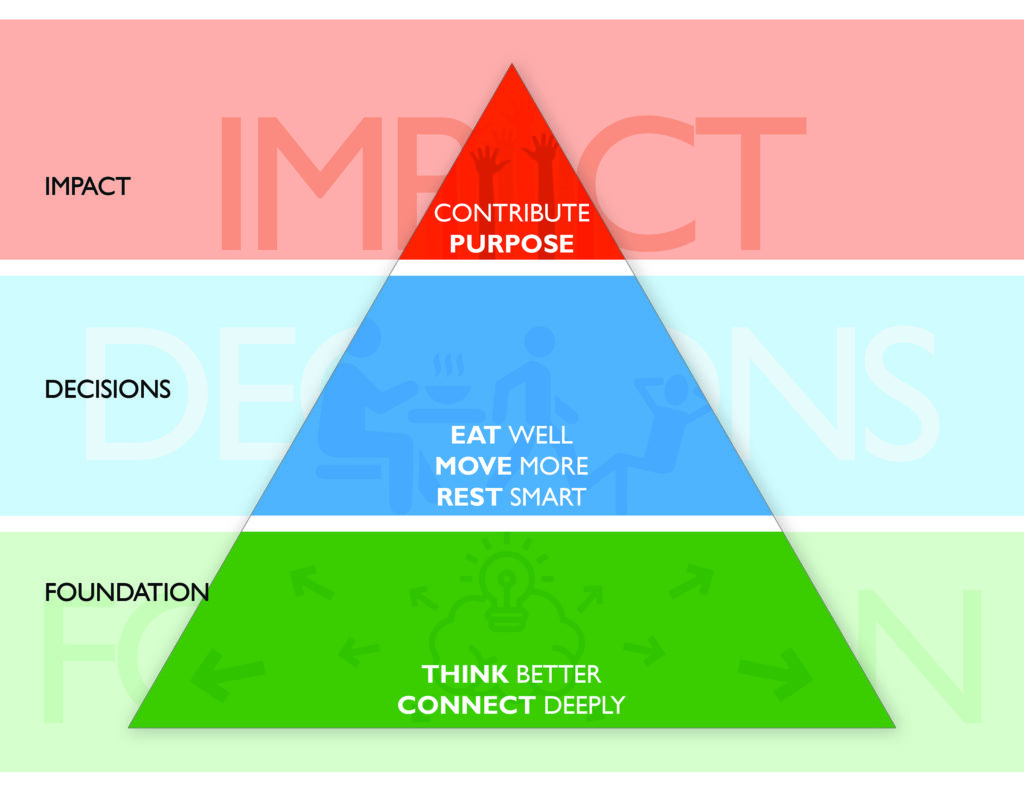
Dr. Shahana has also introduced a groundbreaking approach to health and well-being—the Pyramid of Optimal Health. The Pyramid of Optimal Health is a revolutionary framework that goes beyond traditional health ideas to promote holistic well-being, reduce burnout, and improve life balance and productivity. Moving away from conventional views, she encourages attendees to rethink their understanding of health and adopt a holistic model that examines the connections between physical, mental, and emotional health.
In the end, her message is simple yet profound. “I encourage people not to live for one single purpose or mission,” she says. “Life rarely unfolds that neatly.” Instead, she recommends living with purpose—letting curiosity, compassion, and courage steer the journey.