
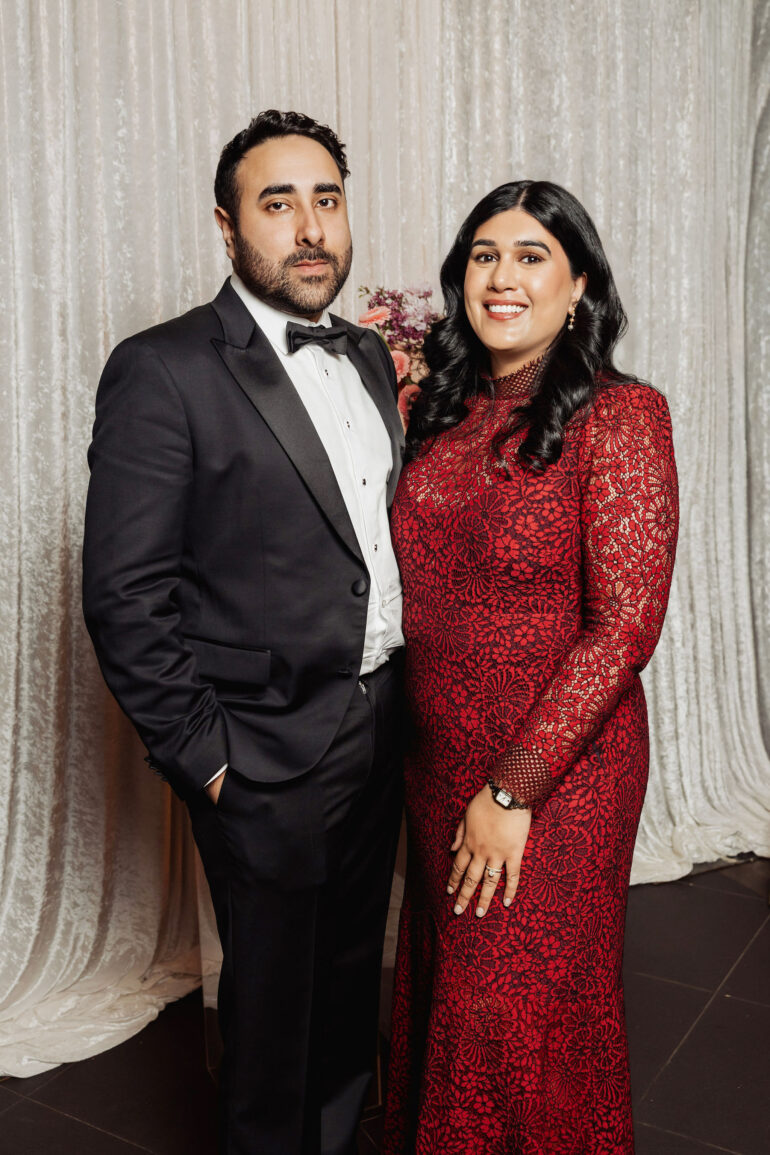
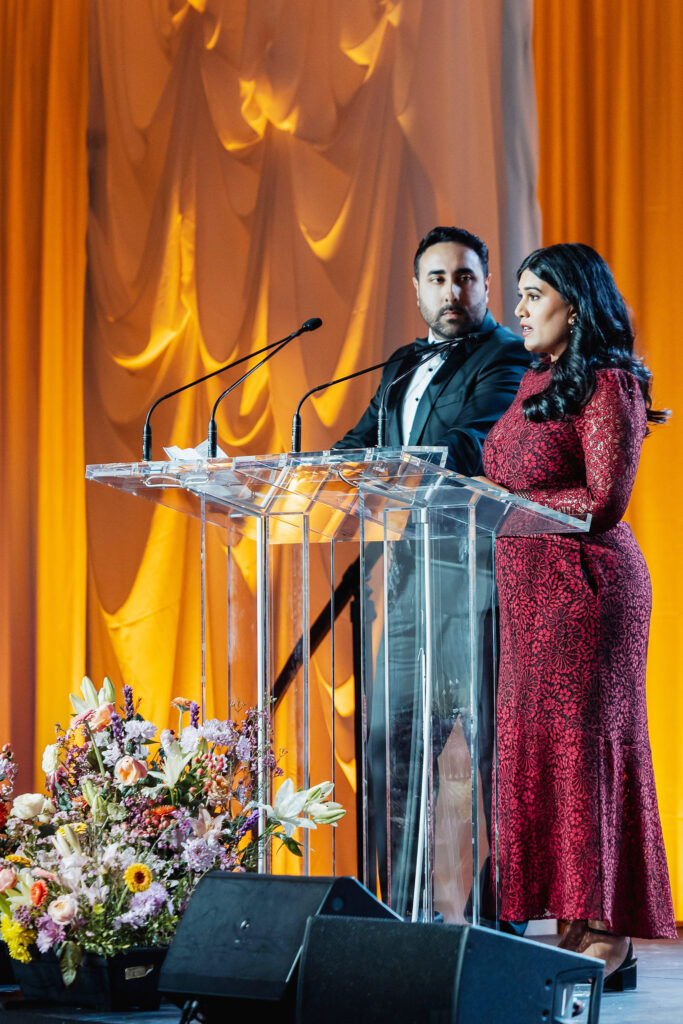
At Surrey Hospitals Foundation’s Celebration of Care Gala 2026, Aman and Kamal stood before a full room to share their story
“I was cleaning the bathroom,” Aman recalls. “I was 25 weeks pregnant, and my lower back was hurting. I didn’t think much of it at first.”
Then she noticed spotting.
“My first instinct was to ignore it,” Aman says. “You push aside small health problems. But this wasn’t about me anymore. I was carrying two living beings.”
Standing in the elevator on the way to the Family Birthing Unit at Surrey Memorial Hospital, Aman had a feeling she wouldn’t be going home that night.
By 9 p.m., they welcomed a daughter, Rania, and a son, Sher.
“It all went by so quickly,” she says. “They told me I was delivering my babies that day, and all I could think was, it’s too early. How will they survive this? There was no time to process anything. It was out of our control.”
Her babies were taken to the Neonatal Intensive Care Unit (NICU) at Surrey Memorial Hospital.
“When we came home empty-handed,” Aman says, “that’s when it really hit me.”
Finding the Warmth
The NICU had a rhythm they were learning to understand.
“I would leave feeling frightened,” Aman says. “The burning question in my head was always, do babies get to go home from here?”
Seeing their babies in incubators, surrounded by wires and monitors, made the distance feel even greater. In contrast, it was the people inside that space that brought something entirely different.
“The doctors and nurses brought warmth into the NICU,” Aman says. They recall many moments when Rania’s nurse, Sydney, and Dr. Moodley took extra time to make them feel at ease. “They made us feel as comfortable as you can be in such an uncomfortable situation.”
Beyond care staff, family carried them through the hardest days. Aman’s mother, Satpal, became a constant presence in the NICU, sitting at the babies’ bedsides, helping shoulder the emotional weight of each uncertain day.
As the days passed, Aman and Kamal began recognizing other parents.
“We saw another baby come in, also born at 25 weeks,” Aman remembers. “And I remembered how it felt to be on that side. Helpless. It’s a feeling you don’t understand unless you’re living it.”
Without hesitation, Aman and Kamal went to them, offering the same reassurance they had received along their own journey.
Rania
Rania was 20 days old.
She was fighting pneumonia.
At 1 a.m., they received a call from Surrey Memorial Hospital. They dropped everything and went to the hospital.
When they arrived, Rania was in her room. A small blanket lay gently over her.
The doctor checked her pulse.
And then, quietly, there was nothing more to do.
“Our hands were on top of the blanket,” Aman says. “Over her body.”
“There was no time to heal,” she says.
In those early days, Kamal had been afraid to touch his babies.
“When they were born, the nurse told me it was okay to do hand hugs,” he says. “I was terrified. They were so tiny.”
He hadn’t held them skin-to-skin at first.
After Rania passed away, that quickly changed. That same evening, Kamal held Sher skin-to-skin.
Holding his son didn’t erase the grief. But it lifted the weight of it.
“For that moment,” Kamal says, “I forgot what had happened twelve hours earlier.”
It gave them strength and something to hold onto.
A Journey Taken, Never Alone
Sher was discharged in August 2025.
There was no single moment that marked the end of their journey, just a gradual realization that they were finally going home together. Sher was stronger. He no longer needed the same level of support.
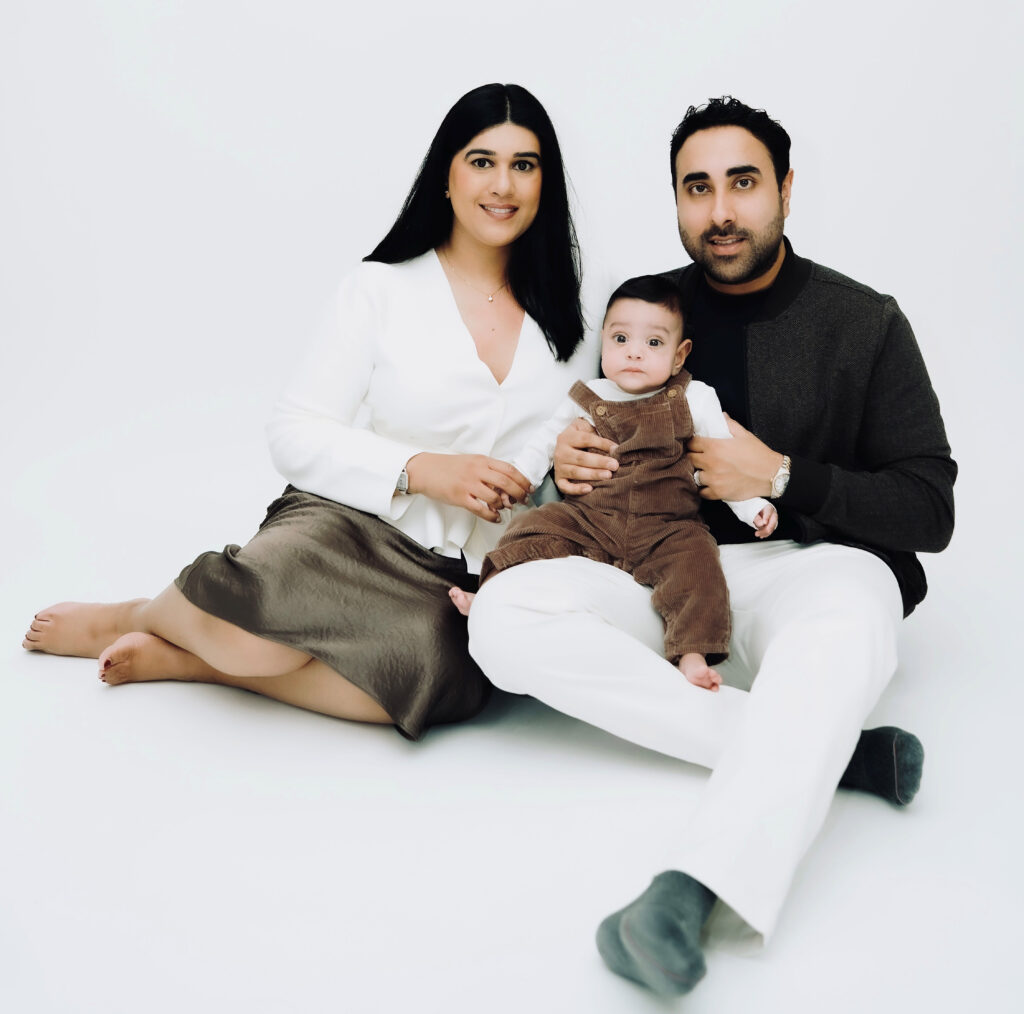
Today, Sher is a healthy, growing baby, curious, bubbly, and full of personality. He keeps his parents very much awake at night.
Sharing their story at the Celebration of Care Gala was their way of giving back to the people who stood beside them. Their family, their care teams, and the community of donors who invest in exceptional health care.
Their journey was shaped by both loss and hope, but they never walked it alone.
Surrey Memorial Hospital delivered more than 6,000 babies last year. The highest volume of any general hospital in the Lower Mainland. As demand continues to grow, donor support is helping strengthen maternal and neonatal care in B.C.’s fastest-growing city.