
By Surbhi Gogia
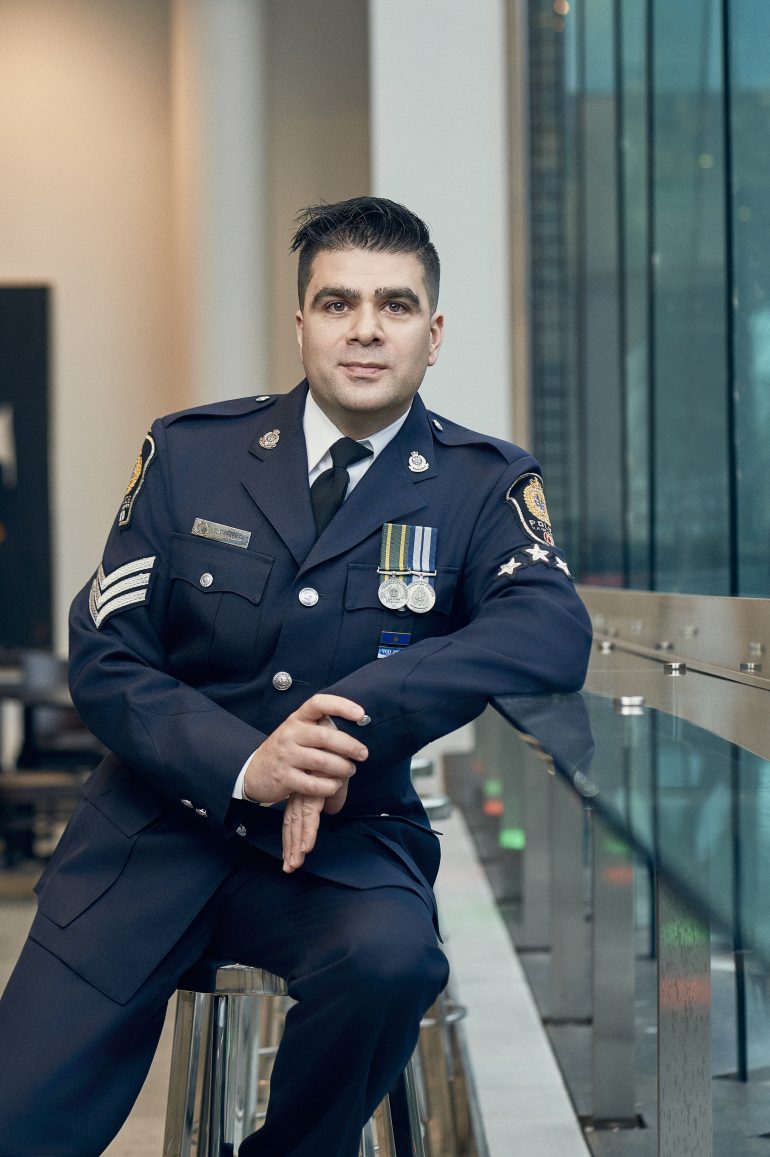
Meet Vancouver Police Sergeant Terry Parmar, who discovered his calling to serve the people of Vancouver while working and volunteering at a community recreation centre. From a single conversation, he was drawn into the world of the Vancouver Police Department-a path that allowed him to make an impact on a far greater scale. Today, he encourages community members to see policing not merely as a job, but as a meaningful and rewarding career.
Canada welcomes newcomers to careers in healthcare, construction, accounting, and other professions. Yet policing rarely makes that list. For many first-generation immigrants, it is a road seldom travelled. Even those born here often see it as a distant dream meant only for individuals steeped in law.
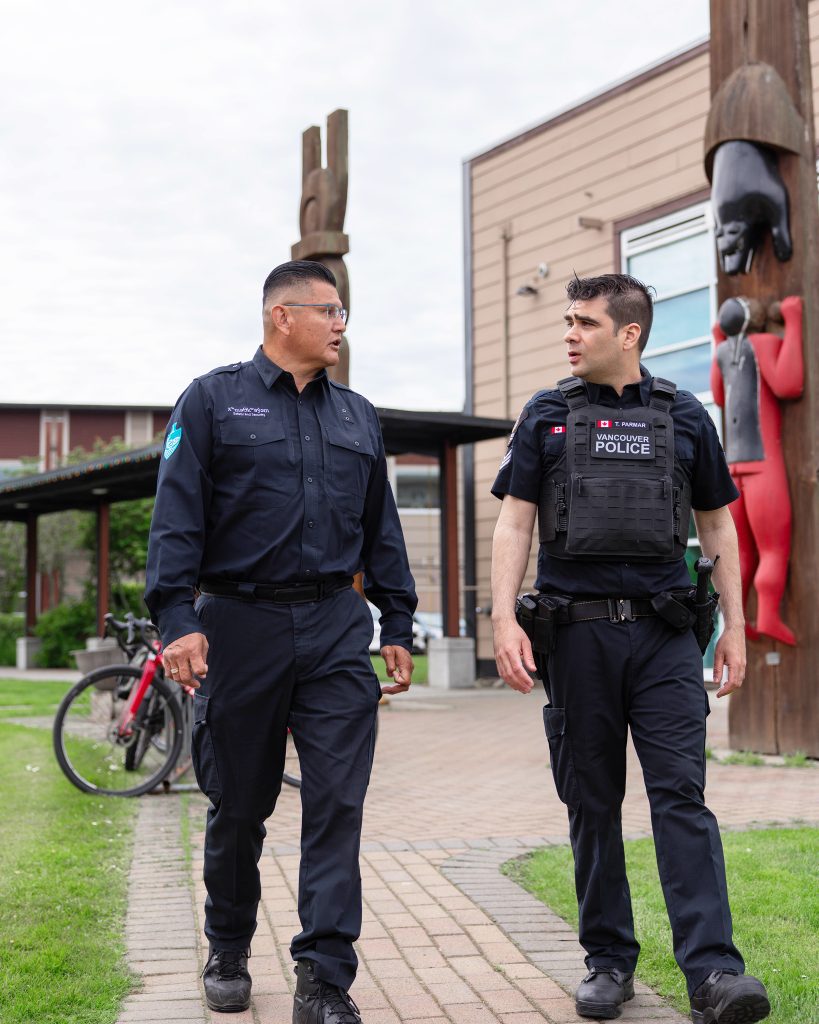
Vancouver Police Department (VPD) Sergeant Terry Parmar reflects on the importance of dispelling the stereotypical image of a stern, distant officer, an image shaped by the media. At its heart, he believes policing is not just about muscle; it is about service. It welcomes people from varied backgrounds who want to give back to the community they now call home. Sergeant Parmar often reminds potential recruits that policing is less about power and more about purpose.
He believes newcomers who have chosen Canada as home and earned permanent residency or citizenship already hold a golden key. Policing, especially with VPD, offers stability, strong benefits, and long-term security, things immigrant families value deeply.
Sergeant Parmar’s story of entering policing is not just about law enforcement; it’s a testament to the power of community service. Sergeant Parmar himself never imagined a career behind the wheel of a patrol car. Born to first-generation South Asian immigrants who came to Canada with little more than hope and hard work, Parmar grew up watching his parents clean buildings, often juggling two jobs at a time, so their children could study and dream bigger. “My parents came from India. They cleaned buildings and supported us throughout, so we could go to school,” he recalls. Like many immigrant families, stability mattered. A secure job with benefits was the ideal that his parents hoped their children would pursue.
“My goal since the beginning was to serve the community. And for me it came through working in a community centre,” he says. After completing a diploma in recreation at Langara College, he joined the City of Vancouver as a community programmer at a recreation centre. “My parents liked it because the job had good benefits and a pension.”
Working closely with youth programs made him feel fulfilled. He was serving the community, making a difference—or so he thought. Little did he know, this was only the first chapter.
Sometimes, it takes just one conversation to change a life. While working at the community centre, Sergeant Parmar met a police officer who sparked his curiosity about policing. That conversation led to a ride-along—a 12-hour shift shadowing a patrol officer.
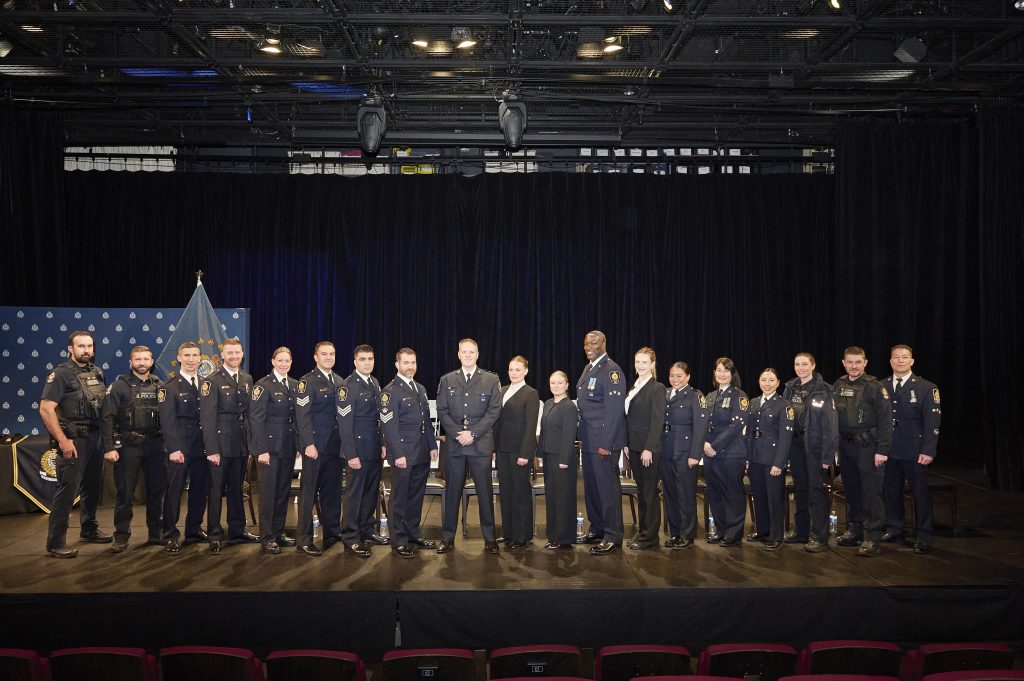
What Sergeant Parmar witnessed left a lasting impression: school visits, domestic violence calls, encounters with hardened criminals, and moments of quiet compassion. Real people facing real problems, hour after hour. “Those 12 hours didn’t exhaust me,” he says. “They made me want more.”
“I fell in love with policing. Every day is a new day, every call you go to is a whole different call. You could be going to resolve a domestic dispute, you could be at a motor vehicle accident scene where you are making sure everyone is safe, or attending school visits to talk about safety tips to kids, all that in one day, and the next day is a brand new day.”
That was the turning point. He realized policing would allow him to serve the community not just in one building, but across the entire city.
The recruitment journey, however, was not smooth. Sergeant Parmar faced setbacks that might have stopped many others. His family was unsure at first. He had to correct his vision. His application was deferred for two years to gain more life and law enforcement related experience.
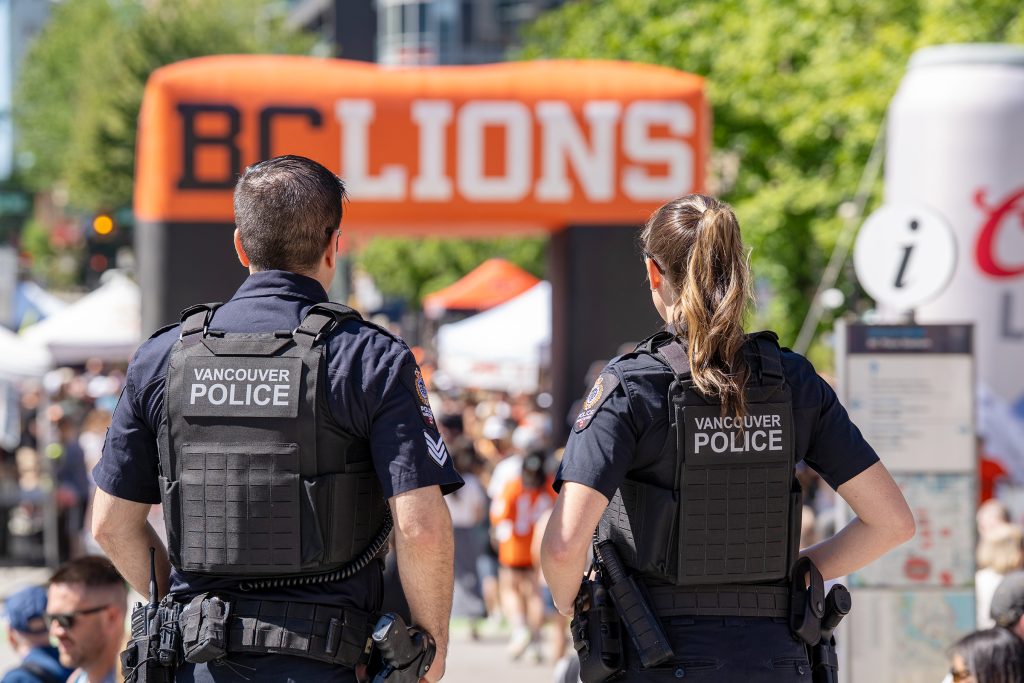
But Sergeant Parmar was referred to the VPD jail guard program (now known as the Special Municipal Constable program (SMC) while he was waiting to apply for the police officer job. Unsure about being a jail guard, he still decided to take the leap of faith, a move that would quietly shape his future. “The jail program showed me another side of the world,” he says. “On any given night, 10 to 50 people could come into jail — domestic violence cases, theft, drugs. I worked full-time and gained skills that helped me later at the Justice Institute of British Columbia (JIBC) for police training.”
In 2008, he was hired as a Constable with the VPD. There was no looking back.
Soon after joining, Sergeant Parmar crossed paths with current VPD Chief Steve Rai, a strong advocate for community policing. Recognizing Parmar’s deep roots in community work, Chief Rai invited him to help run the Ross Street Temple Community Police Office—the first of its kind in North America.
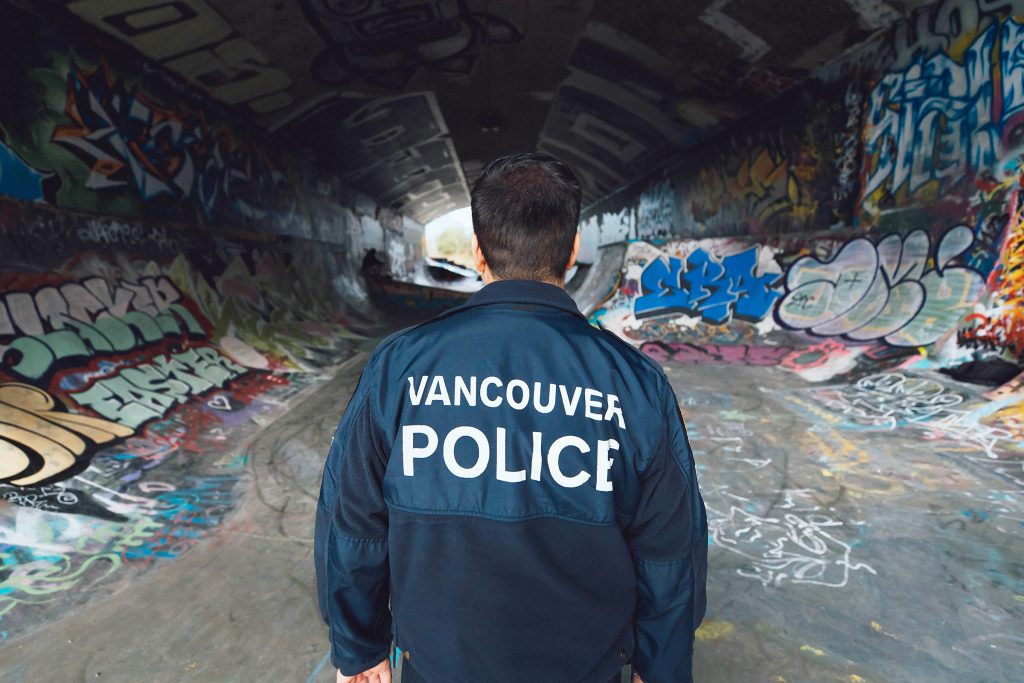
For the next decade, Parmar led the initiative in South Vancouver. “More than 20 volunteers passed through the program, and half of them eventually joined the VPD and the other half other law enforcement agencies,” he says. He also launched the Ross Council, which advises and mentors youth aged 10 to 17. “It was about prevention, guidance, and trust,” he says. “Not just enforcement.”
After several years, Parmar returned to patrol, rotating between community policing and recruiting, before earning a promotion to Sergeant. He later supervised the very jail where his career had begun—now guiding and mentoring the next generation of officers in a full-circle moment.
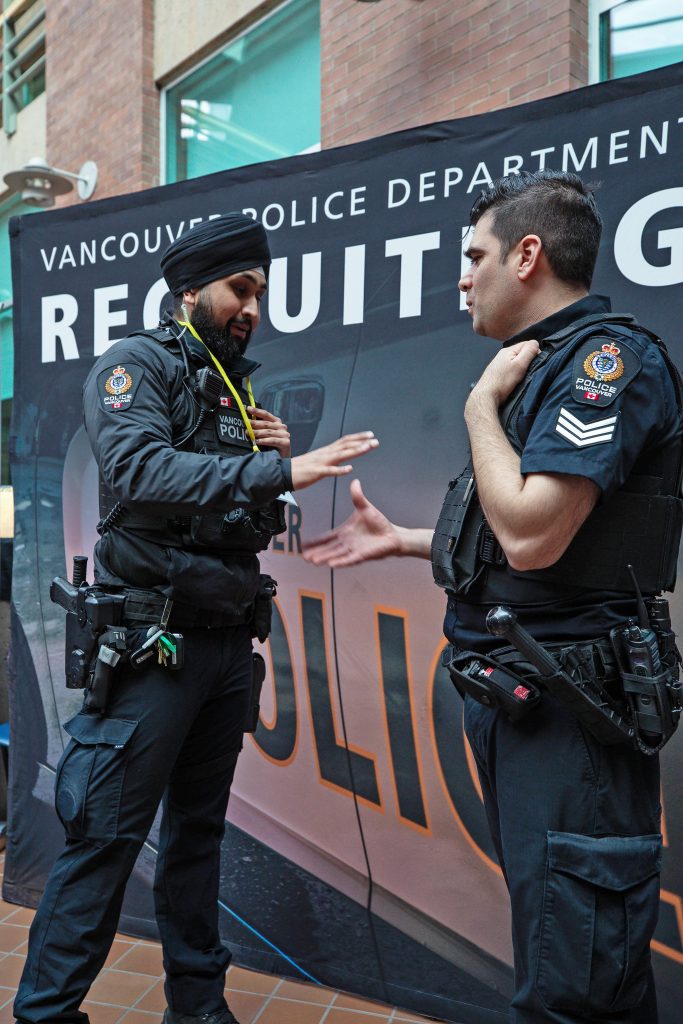
Since 2022, Sergeant Parmar has returned to the VPD’s recruiting section—this time with a purpose to inspire others to join the force. ‘Policing changed the trajectory of my life, and it can change yours too,’ Parmar says. “It is not just for people born here, but for individuals with Canadian Citizenship and permanent residency as well.”
He is keenly aware of the myths that hold many back—especially in South Asian communities. Many newcomers believe policing is only for second- or third-generation Canadians, while immigrants are expected to choose business, teaching, or trades.
“That’s simply not true,” he says. “If you have citizenship or permanent residency in Canada, you can apply to our department. We are hiring.”
International students, he adds, can absolutely dream of a future in policing once they secure PR. And now, through recruitment, Sergeant Parmar is doing what he has always done best: serving the community. He answered the call to service, and now he’s inspiring others to do the same.
Still, VPD does not recruit without thought. “You need time to understand the culture, the people of our city,” Parmar explains. “That waiting period before PR helps with that. Once you’re ready, we’re happy to allow individuals to apply.”
He believes South Asians make excellent police officers because giving back to the community is deeply rooted in their values. In the past, it was mostly second-generation South Asians who joined policing, but today, even those who arrived in Canada just a few years ago and now hold permanent residency have the same opportunity. VPD is recruiting individuals who came to Canada from India with little to their name, pursued college or university studies in Canada, earned their PR, and are now stepping forward to serve as police officers.
Breaking another common myth about policing as a career, many feel criminology is the only path into policing. He suggests that those interested can choose any subject, without limiting themselves. “We have people from all walks of life who join VPD,” Parmar says. “Psychology, sociology, teaching, nursing, law, accounting, trades—even people from the CRA.”
Today, applicants need at minimum 30 post secondary credits to become a police officer. For a position as Special Municipal Constable, a high school diploma is the minimum qualification. VPD, he says, now values life experience, communication skills, and character just as much as formal education.
“If you have a good heart, discipline, and a desire to serve, policing is open to you.”
Whether applying for Constable or SMC positions, an applicant must complete a series of assessments, including a written exam, physical fitness test, and oral interviews. The overall timeline to become a police officer can be as short as three months, though it may take longer if additional reviews or issues arise during the process.
The compensation, Sergeant Parmar notes, is competitive: salaries range roughly from $93,690 to $133,847, with additional overtime opportunities in traffic, special events, and patrol duties. Starting salary for the SMC program is $35.57 to $48.01 hourly (12% to 16% in lieu of benefits).
For Sergeant Parmar, policing is more than a job. It is service in its trust form—from foot chases to finding missing people, from counselling youth to restoring order in moments of chaos.
“Policing opens doors to serve the community in so many ways,” he says. “It’s a noble profession. We need articulate, compassionate, smart people.”
For more information on a career with the VPD, check out Joinvpd.ca.