

By Davinder Bir-Bhatti
For many young people, stepping into their first job is a monumental milestone, a step toward independence, ambition, and career growth. However, enthusiasm can sometimes overshadow caution. In British Columbia alone, about 7,000 young workers are injured on the job each year. To explore why this demographic faces heightened risks and how we can foster safer work environments, Drishti Magazine sat down with Sandeep Mangat, Manager of Prevention Field Services at WorkSafeBC.
Mangat’s career path reflects a lifelong dedication to human health and safety. Arriving in Canada in 1991 with a background in toxicology, he focused his early doctoral and postdoctoral work at the University of British Columbia (UBC) and Simon Fraser University (SFU) on chemical exposure among agricultural workers.
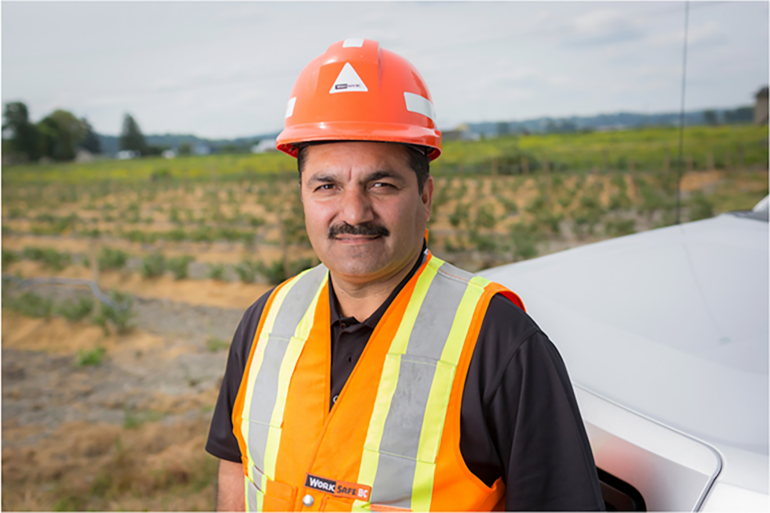
“While I was doing my postdoctoral work, I studied chemical exposure among farm workers, which drew my attention to health, safety, and hygiene,” Mangat recalls. Fluent in Hindi and Punjabi, he spent years bridging critical communication gaps for agricultural workers before joining WorkSafeBC as a safety officer in 2007. Today, he oversees officers across five field offices in Surrey, Burnaby, Prince George, Terrace, and Fort St. John, covering diverse sectors including healthcare, education, retail, and municipal governments.
The Vulnerability of Young Workers
Under WorkSafeBC regulations, a “young worker” is anyone under 25. Often entering industries such as hospitality, construction, retail, or agriculture, these employees bring high energy but limited experience.
“Young workers are inexperienced, highly enthusiastic, and eager to get work done, but they are often reluctant to approach an employer for fear of sounding disruptive.”

This reluctance to speak up, combined with unfamiliarity with workplace hazards, contributes to disproportionate injury rates. Common hazards include slips, trips, and falls, muscle strains, scalding burns in restaurant kitchens, and falls from heights.
When asked what habits young employees should establish from their very first day, Mangat emphasizes three essential pillars: utilizing provided Personal Protective Equipment (PPE), actively participating in job site orientations, and fully understanding worker rights.
Under BC safety regulations, every employee has fundamental rights, including the right to know about workplace hazards, the right to receive adequate training, and, crucially, the right to refuse unsafe work. If a task feels dangerous or training has not been provided, workers are legally protected when voicing these concerns. Furthermore, promptly reporting injuries is vital.
“If you get injured at work, you must report it to be properly compensated,” Mangat notes, highlighting the critical 72-hour window for reporting injuries.
Overcoming the Hesitation to Ask
In today’s digital age, members of Gen Z and Millennials often turn to online searches when they have a question. While technology offers quick answers, Mangat stresses that search engines are no substitute for direct workplace communication.
“There is no such thing as a stupid question. It is something on their mind they aren’t sure about. Encourage young workers to ask freely, answer their questions thoroughly, and help them feel confident.”
Employers share equal responsibility for creating a supportive environment where questions are welcomed rather than reprimanded. Effective injury prevention requires robust, hands-on training and vigilant supervision, ensuring that safety concepts learned during orientation are correctly applied on the shop floor or job site.
Emerging Trends and Final Wisdom
As industries integrate 3D modeling, advanced technologies, and artificial intelligence into everyday operations, safety practices continue to evolve. Yet despite technological leaps, the human element remains foundational. While AI tools can provide information, experienced supervisors and mentors offer invaluable real-world guidance that algorithms cannot replicate.
For those preparing to enter the workforce or embarking on a new professional venture, Mangat leaves readers with a simple, life-saving philosophy.
“In first aid, the first thing they teach you is: before you help someone, make sure the scene is safe, and you are safe. Before you start your first job, know your job and how to protect yourself; always keep safety at the back of your mind.”
By equipping young workers with knowledge, fostering open dialogue, and prioritizing rigorous training, employers and communities can ensure that every young professional returns home safely at the end of the day.
For comprehensive safety guides, industry-specific resources, and information available in multiple languages, visit worksafebc.com.