

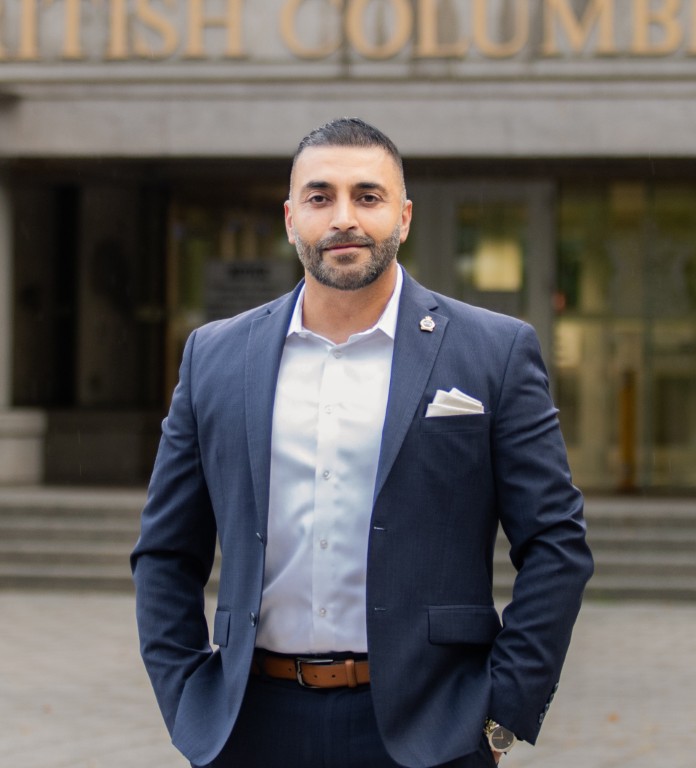
By Davinder Bir-Bhatti
There is a heavy, distinct silence that fills the living room when a parent realizes they are losing their child to gang life.
It is not just fear. It is grief, shame, confusion and love all sitting in the same room. For Inspector Jag Khosa, Executive Officer to the Chief Constable of Surrey Police Service, that silence is where some of the most meaningful work begins.
He has sat with families who were suffering in silence, afraid to call police, scared of community judgment, and concerned that reaching out might make things worse. He has also seen that when a young person is lost to gang life, the pain does not stay within family walls. It follows siblings to school, parents to work, and even the police officers and support members who attend those moments and carry them long after the call is over.
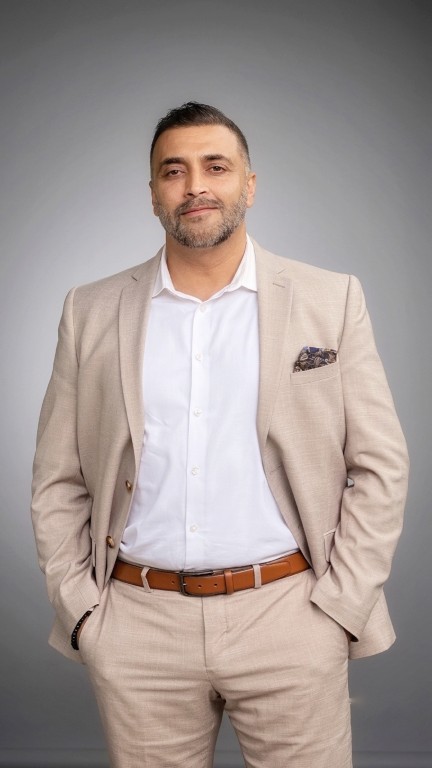
For Khosa, public safety has never been only about enforcement. It is about trust, prevention, intervention and seeing the human story before it becomes another statistic.
Long before he was shaping public safety strategies or advising police leaders, Jag Khosa was a 17-year-old stepping off a plane in Canada. He had no friends here, no support system, no roadmap, and no clear idea of what lay ahead. Like thousands of immigrants in the South Asian diaspora, he took public-facing jobs, worked long hours, faced loneliness, and felt the quiet pressure to survive, adapt and belong.

That journey did not harden him. It gave him empathy.
He eventually began volunteering with Surrey RCMP Victim Services, sitting with families as they faced some of the worst days of their lives. In those quiet rooms, watching ordinary people cope with sudden trauma and fear, he realized that law enforcement was not only about authority. It was about presence, dignity and whether people felt supported when they were most vulnerable.
“What stayed with me was that people often remember less about the authority you carry and more about how you made them feel when they were vulnerable.”
Fast-forward to 2026, and Surrey is in the midst of a historic transition in policing. But as the city grows, community expectations have also shifted dramatically. The days of blind institutional respect are over. People are no longer satisfied with the old-school idea of “trust us because we wear a badge.” Globally, today, people want transparency, equity, accountability and a police service that reflects, understands and listens to the neighbourhoods it serves.
Khosa champions this shift. As a leader who has worked extensively in Equity, Diversity, Inclusion and Human Rights, he knows that trust is not a checkbox on an organizational memo. In a multicultural city, the same police interaction can be experienced in very different ways depending on a person’s life history. A newcomer might come from a country where the police are feared; a teenager might feel the system has already written them off. A victim may carry trauma that affects how they respond in a moment of crisis.
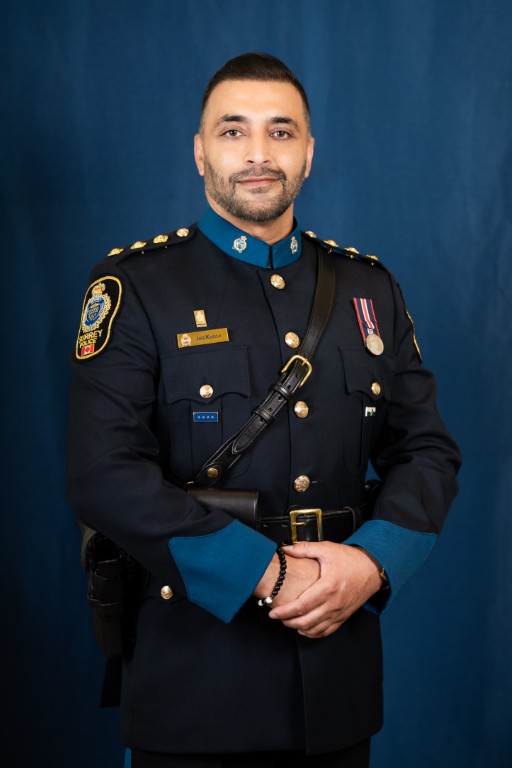
“Trust is not created by the uniform. Sometimes the uniform is exactly what a person fears. The work begins when they can finally see the human being behind it.”
For Khosa, true trust is not built during a press conference or an emergency. It is built when the cameras are off and the room has emptied. After delivering hundreds of parent workshops on gang prevention, he has seen the same moment repeat itself: someone waits behind, often long after everyone else has left, carrying a pain they were not ready to say out loud in public. A mother asks how to pull her son back from gang life. A father shares the fear and shame his family has been hiding. A family reaches out because they do not know where else to turn. Trust begins in those quiet conversations, when people feel safe enough to stop suffering in silence and believe the person in uniform will listen before judging.
That journey, from fearing the uniform to seeing the human being behind it, is what Khosa finds most meaningful.
For years, critics outside the South Asian community often cited a supposed “code of silence” when investigations hit a wall. But Khosa calls it out for what it really is: an oversimplification of deep cultural pain.
When people migrate to a new country, they do not leave their past at the airport. They bring their language, culture, traditions and values, but they also bring their good and bad experiences with institutions, authority and police. Those lived experiences can shape how they view the uniform here in Canada.
For some South Asian families, silence has not meant indifference. It has been fear. It has been stigma. It has been mistrust of the system, concern about family reputation, language barriers, and sometimes simply not knowing which door to knock for help.
“They were not silent because they did not care. Many were silent because they cared so deeply that fear, stigma and uncertainty left them frozen.”
Khosa’s message to these households is both direct and compassionate: reaching out for help is an act of ultimate protection, not a betrayal. But he also throws the challenge back onto law enforcement. Police cannot simply wonder why people won’t come forward; they must work to make people feel safe enough to take that first terrifying step.
When we talk about youth gangs, the public imagination immediately conjures images of flashy luxury cars, designer clothes, and quick cash. But through his years of intense gang intervention work, Khosa has peeled back the layers of that manufactured illusion.
The reality in the Lower Mainland is far more complicated. Many young people who become involved in gangs do not come from poverty or visibly troubled homes. Some come from stable, middle-class and upper-middle-class families. Some are doing well in school or sports. Some appear, from the outside, to have every reason to stay on track.
But when you sit in their living rooms and listen, another picture often appears.
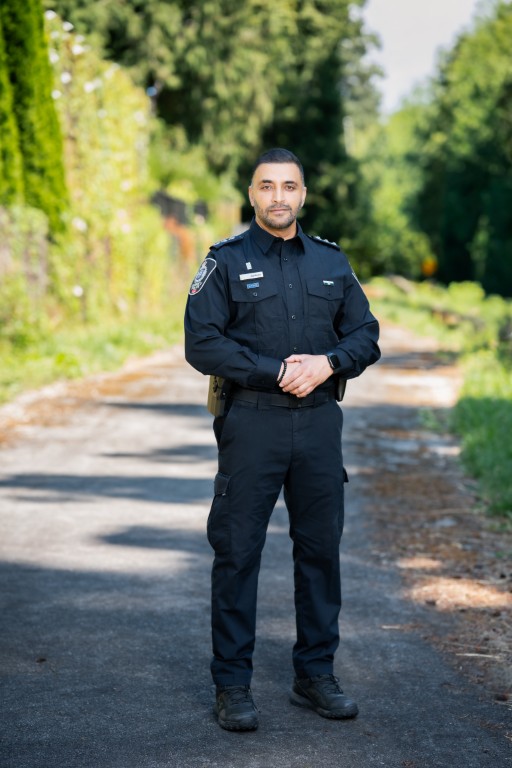
“No child is born wanting to become a gangster. Somewhere along the way, pain, disconnection, trauma or the wrong sense of belonging begins to fill a space that should have been protected.”
Beneath the tough external persona, often lies a history of unaddressed childhood trauma, exposure to domestic violence, severe bullying, untreated mental health struggles, loneliness or emotional disconnection. Sometimes young people are not only chasing money, cars or status. Sometimes they are trying to escape pain in their life.
When a young person feels unseen, unsafe or disconnected, the wrong people can step into that gap and offer a dangerous version of belonging.
Social media has only accelerated that process. It allows harmful influences to bypass the front door entirely, entering a teenager’s bedroom through a smartphone screen. It can glamorize instant status, edit out consequences, and make a destructive lifestyle look powerful or desirable.
“Social media does not just show young people a lifestyle. It can normalize it, glamorize it and place dangerous influences directly into their hands before a parent even knows there is a concern.”
That is why Khosa tells parents that good grades and sports achievements are positive, but they are not the ultimate armour.
“A report card tells you how a child is doing in school. It does not tell you who has their attention, what they are carrying inside, or whether they still feel safe enough to tell the truth at home.”
The warning signs, he says, are often gradual. A new peer group. Unexplained cash. Expensive items with no clear source of income. Multiple phones. Empty baggies. Long unexplained absences from home. Sudden secrecy. Hanging around people much older than their age. Carrying weapons, or even replicas. But sometimes the earliest warning sign is not physical evidence.
“Sometimes the earliest warning sign is not what a child brings home. It is the part of them that slowly stops coming home emotionally.”
The ultimate antidote to this grooming is not only a stronger police response. It is a stronger relationship at home and a stronger network around the child. Khosa’s practical advice to families is simple but powerful: build the relationship before you need the relationship.
In a fast-paced world, many parents work long hours to provide material comfort, but an emotional gap can quietly emerge. Young people may use the cover of late-night jobs, security shifts or delivery work to explain absences and cash. Parents may see the luxury items but not fully understand what is funding them.
Khosa urges parents to look beyond grades and become deeply involved in their children’s lives. Know their friends. Know who they admire. Know what they are watching online. Pay attention when long-standing interests disappear or when a new peer group begins pulling them away from the person they used to be.
Boundaries matter. But emotional safety matters too.
If a child believes that one mistake will lead to total shame or rejection, they may hide the very vulnerabilities that need support. But if they know home remains a place where the truth can be told, even when the truth is difficult, they have a way back.
“Gang prevention does not begin when police find a weapon, drugs or cash. It begins much earlier, when a relationship starts to disappear.”
True public safety, Khosa believes, is an entire ecosystem. It requires teachers who notice a student withdrawing, coaches who notice a shift in attitude, faith leaders who hear about family conflict early, community organizations that understand cultural barriers, and parents who are willing to become involved in schools, PAC committees, sports, mentorship and civic life.
It belongs to all of us.
“Enforcement matters, but enforcement alone cannot heal a family, rebuild trust, or give a young person a reason to choose a different life.”
For Inspector Khosa, real leadership is not about the rank you carry. His leadership style was shaped by his parents, who dedicated their lives to teaching and community service. From them, he learned that true leadership is often quiet. It is not always about recognition. It is about consistency, sacrifice and the willingness to keep giving when nobody is watching.
He was also shaped by immigrant families who carried sacrifice silently, community volunteers who had no title but enormous credibility, police leaders who demonstrated integrity under pressure, and young people honest enough to tell him when systems were failing them.
His own children have also taught him. They have made him a better parent, a better listener and, in many ways, a better leader. They remind him that listening is not simply waiting for your turn to speak. It is understanding how your words, decisions and actions are experienced by others.
“Rank gives you responsibility. It does not give you credibility. Credibility comes from how you treat people when there is nothing to gain from the interaction.”
Policing is a career that requires officers to witness grief, fear, violence and trauma, and then return home to be present as spouses, parents, children, neighbours and community members. While Khosa believes deeply in police accountability, he also asks the community to remember the human being behind the uniform.
As he looks toward Surrey’s future, he envisions a city where effective and compassionate policing walk hand in hand. A city where families seek help before a crisis. Where young people have meaningful pathways to belonging and opportunity. Where victims feel supported. Where newcomers understand the systems around them. Where police are seen not only as responders, but as partners in prevention.
When his time in uniform eventually ends, Khosa does not care whether people remember his rank or professional achievements. He hopes they remember that he showed up: after the meetings ended, after the speeches were over, when families were scared, when youth were at a crossroads, and when trust had to be rebuilt one conversation at a time.
“I arrived in Canada at 17 without a support system and had to learn a new country through perseverance. Surrey became the place where I found my footing, my family and my purpose. This country welcomed me with open arms, and the moment I truly began calling it home, something changed in me. I stopped seeing myself only as someone building a life here and began feeling responsible for helping strengthen the place that gave me the chance to belong.”