
By Pankaj Bhaskar
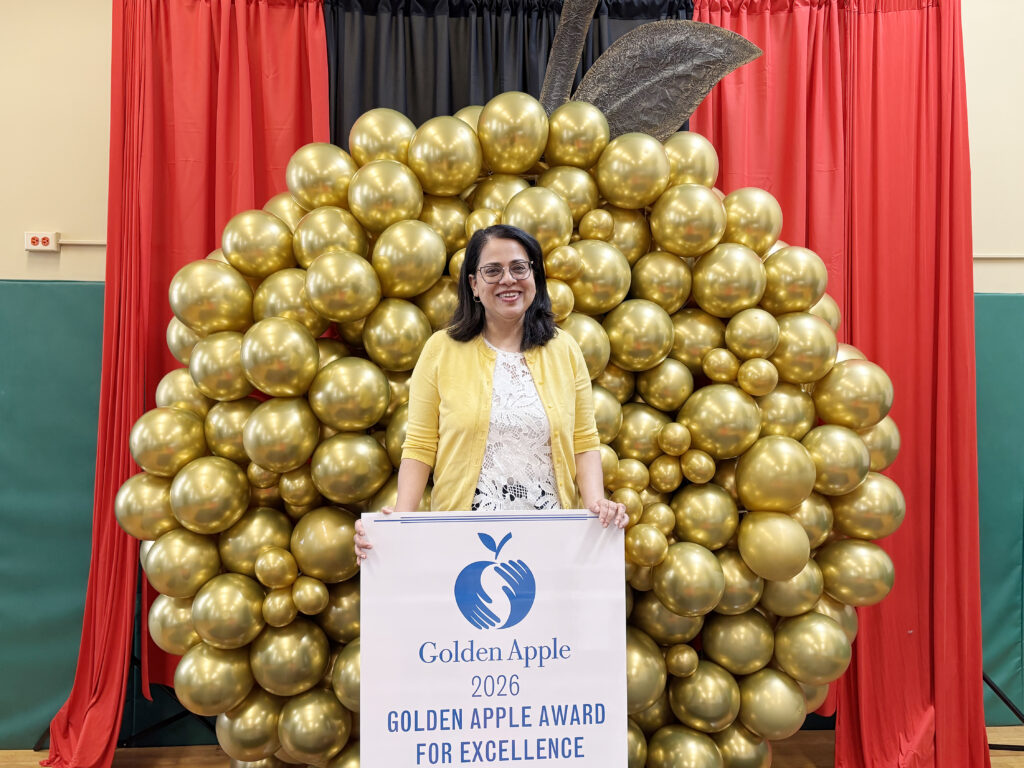
Some inherit land. Some inherit wealth. Some inherit a family name. Nita Sengupta inherited stories. Stories of a grandfather who fought for freedom. Stories of another who healed the poor. Stories carried from Burma to India to Canada, across borders and generations, long before a girl born in Mandalay could understand that one day she too would be called to serve. In 2026, that girl—now a mathematics teacher in Chicago—received the Golden Apple Award for Excellence in Teaching, one of the U.S.’s most prestigious honors for educators. But her journey began generations earlier.
Sengupta’s paternal grandfather was a freedom fighter during India’s struggle for independence. Wanted by British colonial authorities, he and his comrades sought refuge in Burma, risking everything for freedom. Her maternal grandfather, a respected physician, treated those unable to afford medical care. To him, healing was not merely a profession, but a moral responsibility. One grandfather fought. The other healed. Decades later, their granddaughter would teach. Perhaps purpose travels through families in ways we do not immediately recognize.
Years earlier, in Kolkata, there had been a clue to the life awaiting her. As a little girl, Sengupta gathered neighborhood children and played “teacher.” The family’s front door became her chalkboard. But childhood ended. Life moved forward. She earned a bachelor’s degree from the University of Victoria and pursued another professional path. Teaching disappeared from the plan. Or so she thought. Because perhaps some dreams do not disappear. Perhaps they wait.
Decades later, during one of life’s most difficult chapters, Sengupta attended an orientation at Loyola University Chicago. Registered in a different program, she watched School of Education representatives invite prospective teachers to follow them. Teaching was not on her mind. Yet when the group stood, she stood. When they walked out, she followed. Even today, she struggles to explain that moment. It felt almost spiritual—as though life had reached across the years and returned her to the little girl in Kolkata, standing before a door and believing she was a teacher. Perhaps Sengupta had not found teaching. Perhaps teaching had finally found her.
But finding purpose did not mean escaping pain. During a deeply painful period in her personal life, Sengupta found herself fighting for justice through two legal battles while attempting to rebuild the life she had worked so hard to create. There are chapters of a person’s life that can silence them. This could have been hers. Instead, while the storm continued, Sengupta kept building. She worked. She studied. She returned to school. She earned advanced degrees and professional endorsements. She completed second bachelor’s and a master’s degree in education and undertook the rigorous journey of becoming a National Board Certified Teacher. True courage is not simply surviving the storm but daring to build a future while it is still raging.
For almost two decades, Sengupta has lived by one teaching philosophy: “Relationships come before rigor”—because before a child can believe in an answer, they must first believe in themselves. Perhaps because she once searched for belonging, she built a classroom where mathematics meets humanity, differences are celebrated, and every child’s culture, voice and story have a place. In her classroom, achievement mattered, but so did joy, connection and the quiet assurance that no child had to earn the right to fully belong. Beyond academics, Sengupta turned compassion into action—raising funds for cleft lip surgeries for children in South America, flood relief in Bangladesh and students unable to afford school activities and helping provide hundreds of winter jackets and gloves. She taught her students that education is not only a path to success, but a responsibility to humanity.
In South Asian families, we proudly celebrate the child who becomes a doctor, engineer, lawyer or entrepreneur. These dreams have crossed oceans in suitcases, carried by sacrifice and prayer. But every doctor was once a student. Every engineer was once a student. Every leader was once a student. And somewhere in their story, there was a teacher.
The Golden Apple carries Nita Sengupta’s name. But her journey carries the fingerprints of generations. Different generations. Different callings. Perhaps the same inheritance. Courage. Compassion. Service. Ms. Sengupta’s journey reminds us that pain does not have to write the final chapter, and the distance between where we begin and who we become cannot always be measured in miles. Sometimes the dream we leave behind is not lost. Sometimes, it waits. Across countries. Across cultures. Across storms. Until one day, we stand. We follow. And we become who we were always meant to be.