


By Surbhi Gogia
Mark Carney recently stated that Canada is “well-positioned” to capitalize on India’s growing energy demand. BCIT (British Columbia Institute of Technology) is already “well-positioned” to supply the skilled workforce needed as companies build infrastructure to serve this growing market.
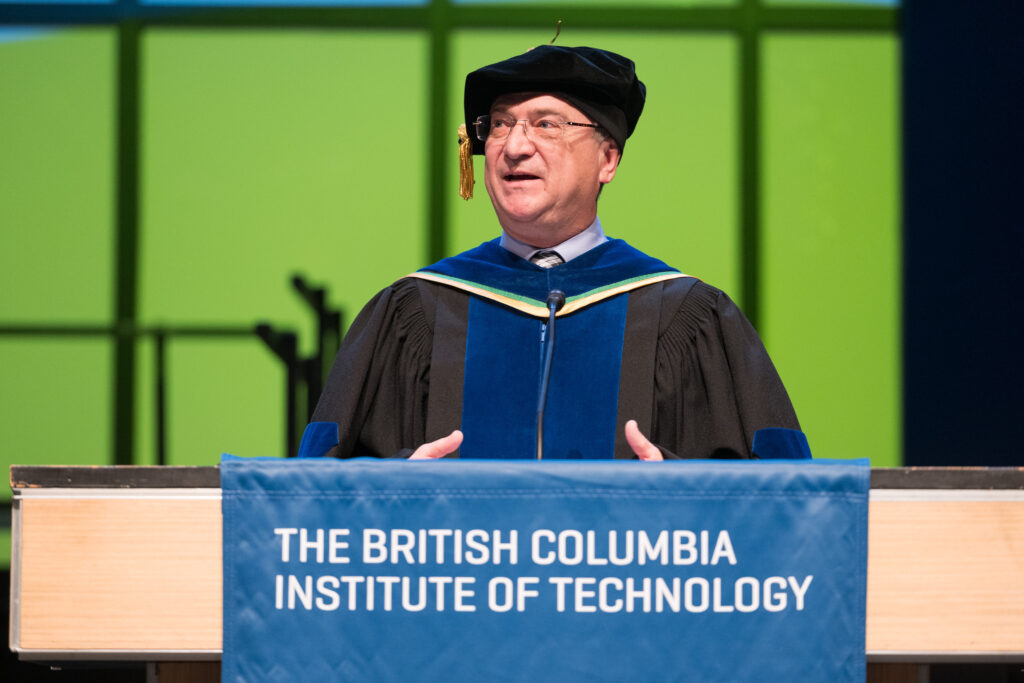
“As a polytechnic, BCIT maintains close ties with industry to anticipate future job-market trends,” explains Jeff Zabudsky, BCIT’s president.
“Polytechnic institutions like BCIT,” Zabudski says, “have a clear advantage in addressing labor market needs. Industry dialogue is their key strength, ensuring students graduate with the skills employers require.”
Industry and polytechnics collaborate closely. “We regularly review and update our programs to match the skills employers need now and in the future.”
BCIT is also provincially mandated. Unlike many polytechnics, BCIT serves the entire province of British Columbia. Often, the institute is at the forefront of economic initiatives.

In the pharmaceutical and biomanufacturing industries, BCIT was responsible for creating training programs. This resulted in specialized programs to prepare workers for roles in pharmaceutical manufacturing.
In addition to its short micro-credentials, BCIT offers certificates, diplomas, degrees, and even master’s programs. They are typically designed with a “laddered” structure that allows students to progress in their careers.
BCIT’s quick response is also clear in emerging industries. A structural panel is made in a factory and then assembled on site. British Columbia’s forestry sector benefits from using engineered wood instead of concrete.
To train workers in mass timber construction, BCIT developed specialized micro-credentials. They adopt best practices from Scandinavian countries, where technology advances quickly, and apply them to the local industry.
International collaboration and industry partnerships provide the students and industries with a foundation for future standards while keeping them up to date with current ones.
As technology reshapes the job market, it is essential to stay focused on the future. Artificial intelligence is a dominant force today. Industries from advanced manufacturing to logistics and design use AI to boost efficiency.
“Automation is replacing traditional coding in manufacturing,” Zabudsky explains. “The process helps companies automate production lines more quickly.”
Job losses are a natural concern, but tech disruptions can also create new opportunities, according to the BCIT president. He states that AI will transform many job categories. As some jobs vanish, new ones will emerge. Despite barely existing a few years ago, prompt engineers are becoming increasingly vital.

“However, some skilled trades won’t disappear anytime soon,” he says. “Construction workers, welders, and electricians will remain essential for decades. More construction work is now done in factories, where components are manufactured and then assembled on site.”
Women who were hesitant to enter skilled trades before might now be more willing to do so. It is safer, more technologically advanced, and more comfortable to work in factories.
“The skilled trades are in high demand,” he says. “Technology makes work safer and more appealing.”
It has also been vital in helping immigrants join Canada’s workforce. Often, newcomers have important skills and experience, but their credentials are not accepted.
To tackle this problem, BCIT works with government agencies to assess foreign credentials. To help professionals upgrade their skills without starting over, the institute offers targeted training.
“Repeating years of education someone has already finished would waste human potential. We will identify the training gaps as soon as possible and provide the necessary education.”
This approach benefits both the Canadian economy and newcomers.
BCIT is also expanding its international partnerships. To offer Canadian-recognized curricula abroad, the institute is collaborating with overseas institutions, including those in India. Students can receive a Canadian-standard education while preparing for careers in Canada through these programs. It is no longer safe to assume that students will automatically come to us. The competition for global talent is intense, so partnerships are crucial.
“BCIT offers a wide range of programs in trades, technology, business, applied sciences, and the creative industries,” Zabudsky said. “The institute has a long-standing focus on resource-based industries like oil and gas, various energy sources, and mining. A new and evolving emphasis on these industries is especially exciting for Canada today.”
In mining, for example, traditional terms are no longer common. The discussion more often focuses on critical minerals for new technologies.
Institutions like BCIT play a vital role in developing the skilled workforce that supports Canada’s commitment to delivering cleaner energy to markets like India. As part of BCIT’s supply chain, students will build the infrastructure needed to transport natural gas, support refining and liquefaction processes, and even work in marine operations, loading LNG onto large ships.
Zabudsky’s vision is to position BCIT as an international leader in applied education as Canada develops new infrastructure. Instead of just reacting to future industry needs, he aims to have the institute grow across British Columbia and strengthen its global partnerships over the next decade.