

How one Medical student is breaking the silence around Mental Illness.
BY J.M. LEE
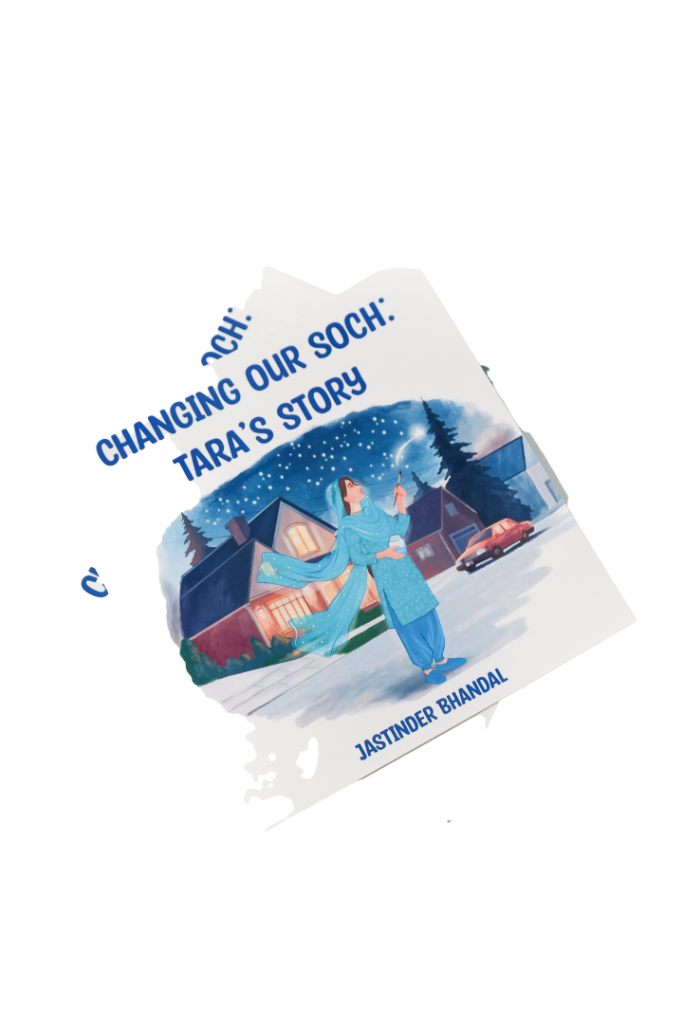
Justin Bhandal never expected to write a children’s book during medical school. But Changing Our Soch: Tara’s Story isn’t just a book; it’s part of his healing, a tribute to his mother, and a call to shift how South Asian families talk about mental illness.
“I was raised in a Punjabi Sikh household in Abbotsford, British Columbia,” Justin begins. “My mother dealt with mental illness, and even though I was young when she passed on, the memory of her struggle and the silence surrounding it never left me. In the community around us, it wasn’t always easy to talk about mental health openly. Throughout it all, my family did everything they could to be supportive and compassionate. Still, mental illness was often misunderstood in the broader community and met with stigma rather than understanding,” he now stresses with conviction.
The ‘silence’ shaped his life in ways he is still discovering. It’s one of the reasons he chose to study medicine. But along the way, he realized that medical training alone isn’t enough to heal what stigma breaks.

“Sometimes, healing begins with a story,” he says. “That’s why I wrote Changing Our Soch. The book follows Tara, a young woman living with schizophrenia, and her family’s journey toward understanding, empathy, and support. It’s designed for children and parents to read together, especially in South Asian households where honest conversations about mental health are still too rare—even taboo, if you will.”

According to the Centre for Addiction and Mental Health (CAMH), there are approximately 2.6 million Canadians of South Asian origin, making them the largest racialized group in the country, accounting for 7.1% of Canada’s total population. Despite experiencing higher rates of anxiety and mood disorders than other groups, South Asian Canadians are 85% less likely to access mental health services when facing the same conditions. That gap isn’t due to a lack of need; it’s a reflection of cultural stigma, fear of judgment, and systemic barriers, such as the absence of culturally appropriate care and language support.
“In many South Asian families, mental illness is still seen as a sign of weakness, something to be hidden rather than treated,” Justin goes on with sadness in his voice. “Fear of bringing shame to the family or being labeled can prevent people from speaking up, even when they’re suffering. These beliefs isolate those who are struggling, making it harder for them to seek help and harder for loved ones to know how to support them. Writing this book was my way of confronting that silence and helping others find the words I didn’t have as a child.”
This book is for people like Justin’s mother and for those families who want to help but don’t know how. “For young people growing up with questions and fears, they often lack the language to express them. I wanted to create something gentle yet honest, something that says: ‘You’re not alone, and there is strength in speaking up.’”
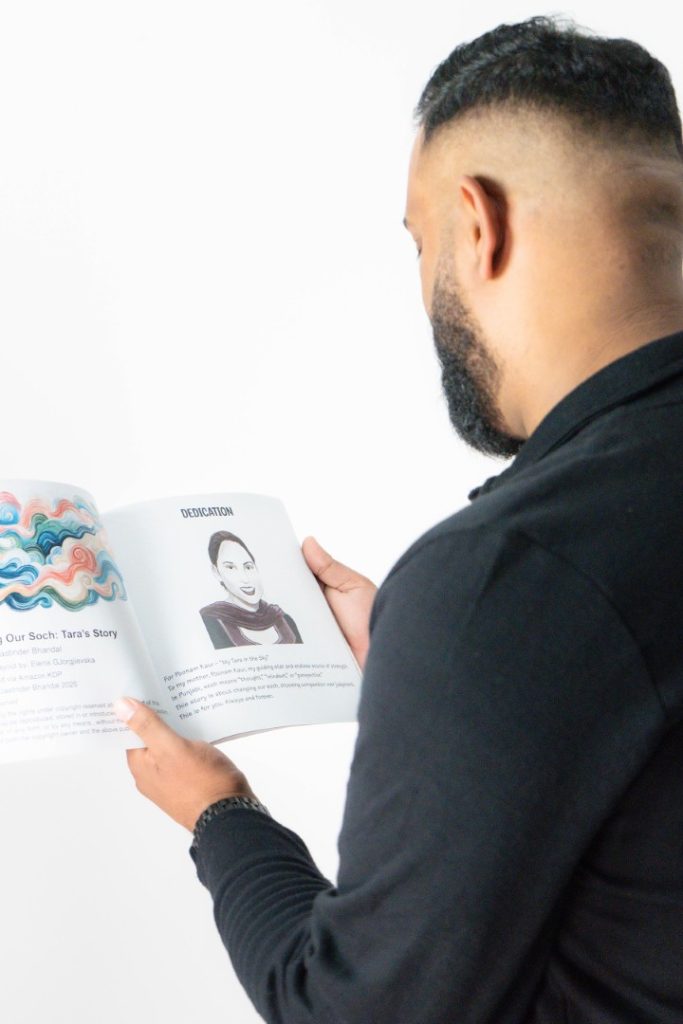
Balancing this project with medical school in Ireland hasn’t been easy for Justin, but it’s never felt like a burden. If anything, it has grounded him more deeply in why he chose this path in the first place.
“Outside of the classroom, I’ve been fortunate to work with organizations like the Abbotsford Division of Family Practice, the Abbotsford Hospice and Grief Support Society, and the Canucks Autism Network. These experiences have taught me that meaningful change often happens outside of clinic walls through outreach, education, and building trust in the community.”
One day, Justin hopes to return home to British Columbia to practice as a family physician, serving the same community that shaped him. “But Changing Our Soch is my way of giving back now. Suppose it helps even one family feel seen or start a conversation that didn’t feel possible before—it’s already half a battle won.”
As part of his mission, Justin has committed to donating all proceeds from his book to the British Columbia Schizophrenia Society. It’s a small way to honor his mother’s memory and to support the very families and individuals still navigating what they once did. He wants this story not only to open hearts but also to directly support the people working every day to provide resources, education, and hope.
“When I was a child, I couldn’t do anything to help my mom,” Justin says with a voice full of sharp pangs of loss. “I didn’t have the words, the knowledge, or the power to change what was happening around me. But now I do,” his tone changes with conviction. “I’m determined to use that, not just as a future doctor, but as a son, to make sure no child has to grow up in silence the way I did.”
He then pulls a deep sigh before saying, “For my mother, thank you for everything, including the words you couldn’t say. This is for you.”