

By Veeno Dewan.
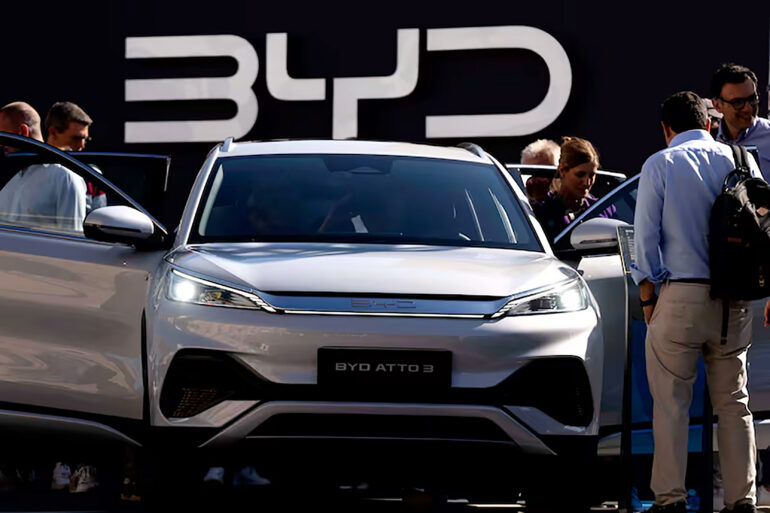
Canada’s early 2026 auto deal with China will allow 49,000 Chinese EVs (Electric Vehicles) to enter the country at a lower tariff rate of 6.1%, down from the 100% tariffs added in late 2024. Under the newly reached terms, “It’s also anticipated that within five years, more than 50 percent of these vehicles will be affordable EVs with an import price of less than $35,000,” said Canadian Prime Minister Mark Carney. Currently, there are no EVs priced below C$30,000 (US$21,894) in Canada, but the Carney government hopes rising competition will soon change that. The deal is in exchange for lowering tariffs on Canadian agricultural exports to China – particularly canola oil, one of Canada’s top agricultural exports.
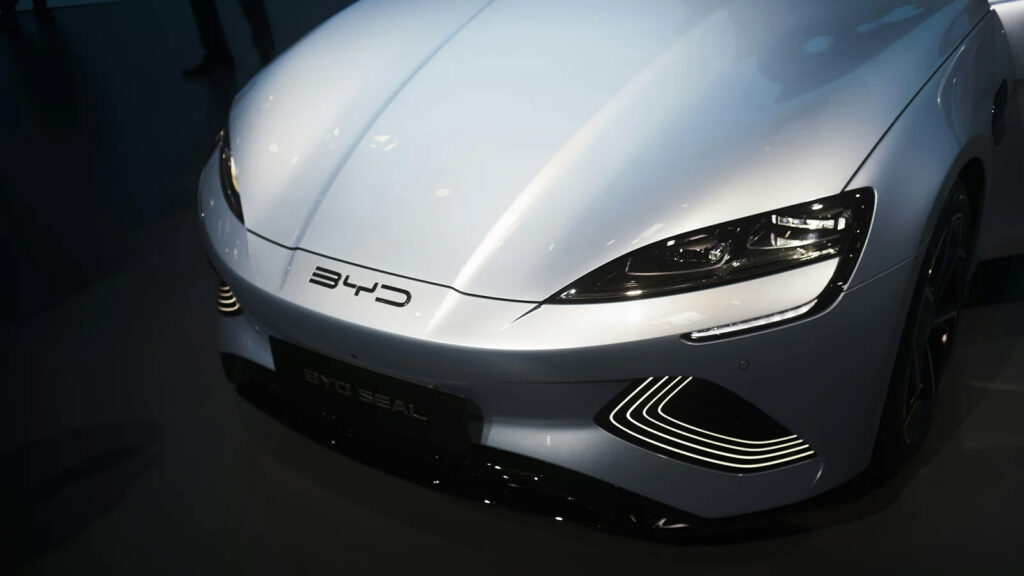
The agreement permits 49,000 Chinese EVs to enter Canada in the first year at the aforementioned 6.1% tariff rate. The quota increases by 6.5% annually, potentially reaching 70,000 vehicles by 2030. The deal mandates a phase-in of “affordable” vehicles, requiring 50% of Chinese imports to be priced below C$35,000 (landing cost) by 2030.
The Benefits of the Deal.
Uptake in EV purchasing – More affordable and diverse product offerings from China could help reverse the current slowdown in EV sales caused by the phaseout of government subsidies and incentives. This has led to consumer concerns about high EV prices.
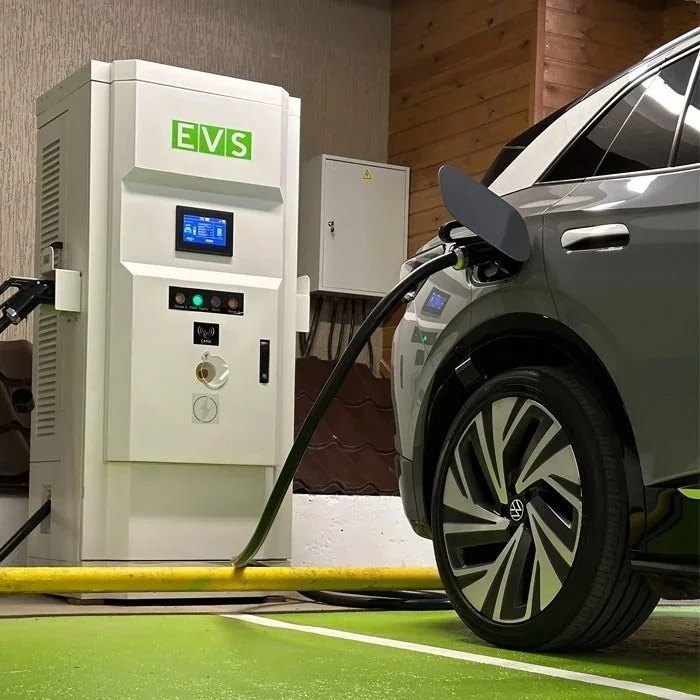
Technology Benefits. The hope is that China’s advanced lead in EV and battery technology, along with production cost reductions, will also present an opportunity for Canada to diversify its electric vehicle supply chains through strategic partnerships. This could help Canada’s auto industry accelerate innovation, reduce production costs, and increase the variety of EV models offered to consumers.
Why are there no Chinese EVs up to now?
There has been pent-up demand for affordable EVs. Sixty-one percent of Canadians surveyed in a Canadian Leger poll between Jan. 30 and Feb. 2, 2026, were in favor of Chinese EVs in the Canadian market. However, the relative lack of Chinese EVs on the road in North America and most of Europe has been a deliberate government policy choice, with most countries implementing high tariffs to protect their domestic manufacturing industry. Several nations, including the U.S. and Canada, have imposed prohibitive import tariffs and strict restrictions on the eligibility of Chinese EVs for consumer subsidies in recent years.
Hopes and Aspirations for the Deal.
In 2023, the Canadian government under Justin Trudeau implemented regulations that would have required zero-emission vehicles to account for 20% of light-duty vehicle sales in 2026, with the target rising to 60% by 2030 and 100% by 2035. However, Prime Minister Carney recently announced the suspension of the 2026 sales target, as electric vehicle (EV) sales have declined sharply in 2025. This decline has been driven primarily by high prices and the withdrawal of government subsidies. As a result, EV adoption targets are unrealistic and not feasible for the Canadian auto sector, which is already struggling to adapt to the U.S. trade war.
Implantations and Concerns around the Agreement
Industry Concern: Auto worker unions, such as Unifor, and major automakers, such as Stellantis, are concerned that the influx of subsidized Chinese EVs will hurt Canadian auto jobs, with calls to avoid simply assembling rather than manufacturing these vehicles in Canada. The move puts Canada at odds with U.S. trade policies, potentially risking Canada-U.S. supply chain relationships.
Not so cheap in the long run – Points of concern include the fact that imported EVs from China may not be as cheap as buyers expect in the long run. Although Chinese EVs are incredibly cheap in China (US$10-20k) thanks to government subsidies, prices are twice as high in Europe as in China. In part, this is because imported vehicles face higher costs related to shipping and logistics, tariffs, and vehicle specifications that conform to local standards. Chinese automakers have to charge more simply to maintain profit margins. Being “affordable” means having an import price below C$35,000, but auto analysts say final retail prices will be higher – in some cases by as much as 40 percent – once shipping costs, dealer margins, and taxes are added.
Auto Industry fears
The 49,000 quotas for Chinese EVs is equivalent to about 30 percent of Canada’s zero-emission vehicle sales last year, according to figures released by the Canadian government. Despite the federal government’s backing, the import of Chinese EVs has drawn the ire of Ontario Premier Doug Ford, who called the deal “terrible for the auto sector in his province.” Ford also claims the Carney government did not consult him or the automotive sector in Ontario before announcing the deal.
Cybersecurity and spyware concerns. Given the sophisticated technology and the use of AI in Chinese EVs, a Canadian Leger poll conducted between Jan. 30 and Feb. 2, 2026, found that 33 percent of respondents cited privacy and security concerns about Chinese EVs. Conservative Leader Pierre Poilievre has criticized the deal with China, citing that Chinese-made EVs may be used as “roving surveillance systems on Canadians.”
Leaders in the automotive industry are also concerned. “It’s a bad idea to allow Chinese vehicles into the Canadian market,” said Brian Kingston, Chief Executive of the Canadian Vehicle Manufacturers’ Association. “Not only is there a trade issue that damages the domestically made auto industry, there are also a range of security and national security-related issues.”
The Canadian auto industry is very worried because the U.S. and Canadian auto markets are heavily integrated across both production and sales. Roughly 95% of Canadian motor vehicle and parts exports go to the U.S. each year, while roughly 40% of U.S. motor vehicle and parts exports go to Canada. Any unilateral policy decisions regarding the automotive industry are challenging for Canada and raise concerns among the U.S. auto industry, which sees Canada as a “backdoor gateway” to Chinese cars.
Sources: Government of Canada, StatsCan, Canadian Vehicle Manufacturers’ Association, Electric Vehicle Affordability program (EVAP) for Canadian auto dealers, Canadian Automotive Dealers Association, Ledger surveys, Conservative Party of Canada, Government of Ontario, Lorraine Sommerfeld.