

By Davinder Bir-Bhatti
If you are looking for a standard lesson in rock ’n’ roll posturing, don’t ask Brad Merritt.
The co-founder and bassist of Vancouver’s legendary alt-rock juggernaut 54-40 isn’t particularly interested in the mythology of stardom, retro music-video nostalgia, short-lived social media clout, or in looking back on four decades of Canadian music history through rose-colored glasses. When asked what advice he would offer the next generation of aspiring young musicians, his response is unfiltered: “Don’t do it. Go do something else. And if they say, ‘I don’t care, I’m going to do it anyway,’ then I say, ‘Good for you.’ You have to be compelled. Doing what you do has to be its own reward.”

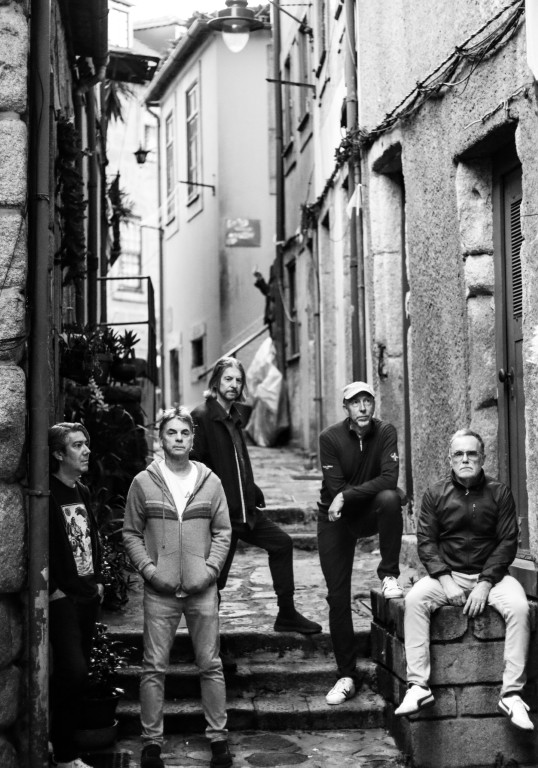
That stubborn, uncompromising ethos is precisely why 54-40 is still here forty-five years later. While countless bands from the 1980s DIY boom succumbed to burnout, internal drama, or shifting commercial trends, Merritt and frontman Neil Osborne have devotedly built one of the most enduring legacies in Canadian music. The band continues to chase the muse, recently releasing an 11-track record recorded in Portugal. Despite the proliferation of AI-composed songs and singers, Merritt’s philosophy remains steadfast: Art isn’t a transactional outcome; it is a lifelong process.
To understand how 54-40 survived, go back to Vancouver in 1981. The underground scene was an explosive, chaotic arena fueled by raw expression, punk rock, and total independence. Merritt, with a background in piano, joined the fray because the band needed a bass player. At Long & McQuade, he figured everything else out on the fly.
After the intense adrenaline high of a gig faded into an emotional crash, Merritt asked Osborne and made a wild, life-altering proposal: Why don’t we just decide right now to make 10 records?
“Once you make that decision, it frees you up… come hell or high water. We were going to do it, alongside our day jobs.”
That single pact shifted their focus from short-term fame to mastering their craft. Pooling their money for studio time and quitting their family businesses, they committed unconditionally to the road. That relentless drive carried them around the world, from grueling tour vans in North America and 28-show European runs to filming music videos across Hong Kong, Thailand, Kenya, and Morocco.
Through decades of raining pterodactyls and dinosaurs, with labels crumbling overnight, Osborne and Merritt sat on a bench outside Toronto City Hall, figuring out their next move. 54-40 refused to let even a deluge stop them from mapping their future. Inspired by Rush drummer Neil Peart’s mantra, “First you have to last,” they adopted it, regrouped, and kept creating.
The band maintains its relevance after forty-five years; Merritt’s perspective is radical for its simplicity: “No one can make you irrelevant without your permission. We’re still relevant because we create, play shows, and people show up.”
For Merritt, relevance isn’t about fitting into the modern cultural zeitgeist or competing with viral influencers. It’s standing behind work that has genuine value. When fans write letters explaining how timeless tracks like “I Go Blind” or “One Day In Your Life” saved them during difficult teenage years, Merritt accepts the compliment with deep gratitude, even if he tries not to let the pressure of that legacy enter the room when writing new material.
When 54-40 first stepped onto garage stages in the early 1980s, every show felt like an urgent crusade, a raw push to deliver what Merritt calls “Three Chords and The Truth” to whoever was listening. Today, stepping onto a stage carries a different, beautiful frequency.
“Now, it’s like a celebration, creating a sense of community: we’ve gone from mission to celebration.”
When the lights dim and the amplifiers hum, Brad Merritt isn’t reflecting on music-industry shifts, streaming charts, or decades of travel. He is looking out at a room full of people connected by a shared frequency, anchored by songs that have outlasted the era in which they were written.
When you strip away 45 years of road stories, industry noise, and rock ‘n’ roll lore, Merritt’s focus remains anchored in the present. The band recently released an 11-track record recorded in Portugal, proving that the creative well is far from running dry. The journey isn’t about wrapping up a career or taking a bow; it’s simply about letting the art express whatever needs to come out next.
“Each song is a tale unto itself. A lot of it is deeply personal. Who knows what will happen in the future? This could be our last, but I don’t think it will be. It’s the nature of art to take what’s inside you and pull it out.”
At the end of the day, whether performing to packed auditoriums or sitting down with a new set of chords, Brad Merritt’s verdict on 45 years in Canadian rock comes down to one absolute truth: “Just the songs. I don’t care about the show or videos or TV appearances. Just the songs.”