

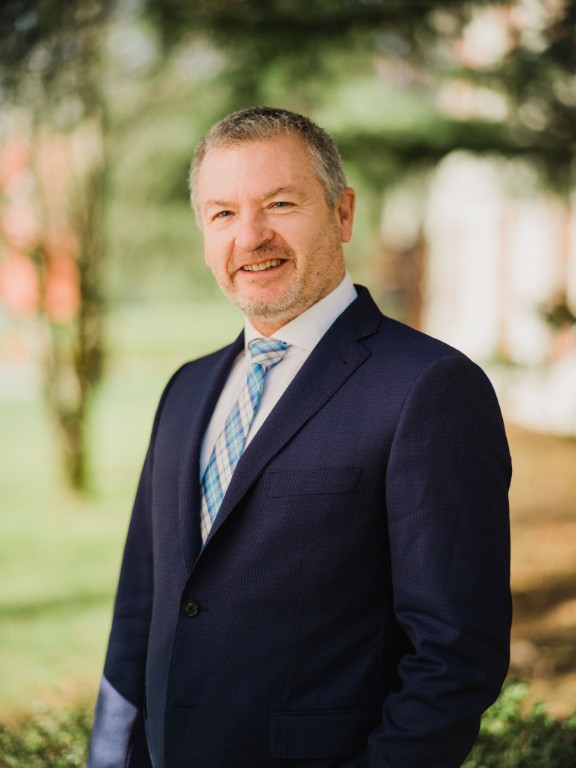
Michael McKnight, CEO of United Way BC, with an impressive experience of restructuring charities, talks about how charities can remain relevant in an era of shrinking donations and growing demands
By Surbhi Gogia
The Lapu Lapu tragedy shocked British Columbians when 11 innocent lives were lost. Beyond emergency aid, the more urgent need was providing support before it was requested. United Way British Columbia (UWBC) addressed this need—arranging travel for grieving families, offering financial help to those unable to work, and ensuring access to long-term mental health care.
Such work exemplifies UWBC’s philosophy: when life turns upside down—whether through floods, fires, or personal loss—charities must go beyond immediate relief. UWBC has created a model that identifies gaps in social systems, scales solutions to address them, and leaves a blueprint for others to follow.
At the helm of this vision is Michael McKnight, President & CEO of UWBC. A leader with both heart and foresight, he has redefined how charities can remain relevant in an era of shrinking donations and growing demands. His approach has helped small initiatives grow into robust institutions by modernizing systems, embracing technology, and introducing disciplined strategies—all while maintaining a focus on the core of charity: supporting those in need.

McKnight believes that charitable organizations should operate both efficiently and effectively so that every dollar donors contribute is used to support the most vulnerable and create a significant impact in the community.

McKnight’s path was shaped early. Drawn not to corporate life but to community service, he pursued an undergraduate degree in communication. Due to the recession, he landed his first job as a social worker for a children’s organization, rather than in communications. His first job aligned with his values and passion, leading him to pursue a Master of Non-Profit Management at McGill.
At just 33, he became the CEO of Big Brothers Big Sisters of Canada. The organization was struggling, and even he doubted whether he could succeed. “Someone showed faith in me when I wasn’t sure of myself,” he recalls. Under his leadership, multiple chapters were merged into one strong organization, allowing the charity to serve 40,000 children annually. The lesson was clear: unity creates strength.
“Fundraising is more difficult than ever, with fewer resources and higher demands,” McKnight explains the reasoning behind mergers. “Smaller charities face challenges with governance and strategy, but mergers help them combine resources, concentrate on their mission, and serve more communities.”
The same philosophy guided his leadership at United Way. United Way has existed in North America for over 100 years as a “federated fundraiser” and supporter of social services.
Once divided into 12 smaller entities in BC, the organization lacked capacity. McKnight’s bold, innovative approach resulted in the smooth merging of these entities into a single UWBC, transforming the delivery of social services and strengthening community bonds throughout the province.
“One organization means consistency across the province and more money back to communities,” he says. The change not only made UWBC more efficient but also more credible to governments. “Instead of 12 different proposals with 12 approaches, we now deliver coordinated programs across BC. That secured lasting federal and provincial support.”
The merger raised concerns about layoffs, but McKnight stayed committed to protecting staff. “We’re a people’s organization. We redeployed our teams into new roles instead of letting them go. Every dollar raised after the merger went further—and that built trust.”
Today, UWBC helps more than four million people each year, focusing on urgent response, children and youth, seniors, mental health, poverty, and food security. Besides fundraising and working directly in communities, the organization aims to find gaps in services and create programs to fill those gaps.
The pandemic challenged every charity’s creativity. UWBC responded with digital solutions like the Food Link app. Instead of letting surplus food go to landfills or accumulate at food banks that didn’t need it, the app enabled farmers, retailers, and suppliers to list available food. Food banks and distributors could claim what they required, while volunteers managed pickup and delivery.
“Donors today are much more savvy in how they engage,” McKnight notes. “For small charities, maintaining an online presence while creating a real impact can be overwhelming. As a consolidated organization, we’ve invested in digital storytelling to connect meaningfully with donors.”
During times of rising inflation, charitable giving can easily become a lower priority. However, McKnight believes that the value of giving goes beyond money. “When British Columbians give—whether money, time, or talent—they’re not just helping others. They’re restoring meaning in their own lives. A sense of community unites us, strengthens us, and carries us forward.”
Reflecting on the South Asian community, McKnight says, “Canada’s strength is in its mosaic. When floods occur, South Asians help everyone, not just their own. That spirit of giving benefits us all. It’s what makes me proud to be Canadian—and proud to be British Columbian.”